
The Maestra and Symphony guide
Seed-grown agave, harvests from five states and barrels built with four oak origins: follow the two Mijenta series from their first releases.
Explore the bottles ↓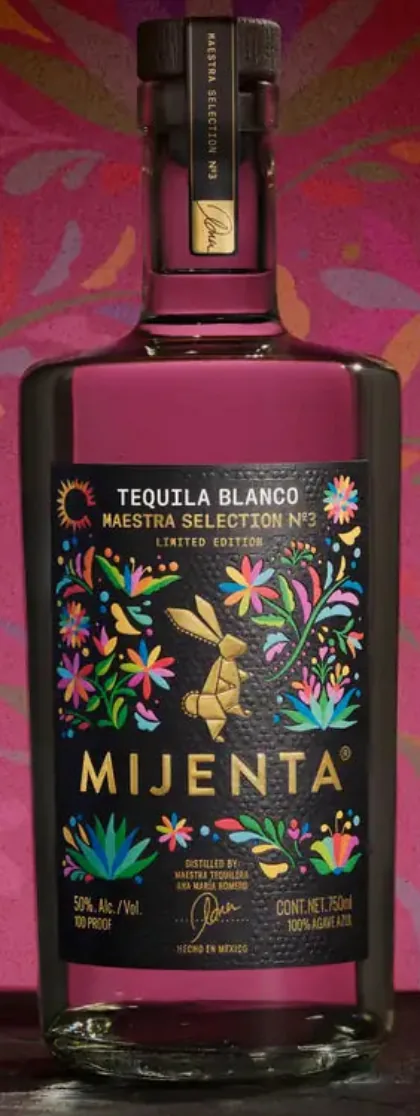
Two release series
Maestra works with different agaves; Symphony brings four oak origins into each barrel
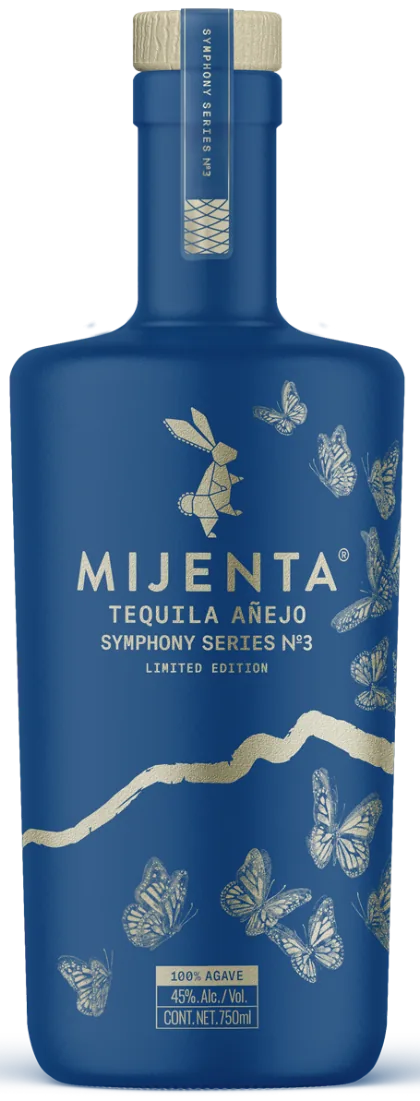
Ana María Romero’s Maestra Selection includes seed-grown agave, a blend from all five tequila-growing states, and a release made with volcanic stone, wooden fermentation tanks, copper stills and clay resting pots. The Symphony series follows a barrel design that combines oak staves from four US states. By September 2026, each series had three US releases.
Maestra Selection
Three blancos, three approaches to the agave
| Release | Class and strength | Agave and production | First US release |
|---|---|---|---|
| No. 1 | Blanco 50% ABV · 100 proof | Seed-grown agave from Presa de Otomites, a single estate in Jesús María, Jalisco; average maturity about eight years. NOM 1412. | 3 September 2024 |
| No. 2 | Blanco 40% ABV · 80 proof | Agave from one estate in each of Jalisco, Guanajuato, Michoacán, Nayarit and Tamaulipas. The five origins were distilled separately, then blended. NOM 1412. | 8 September 2025 |
| No. 3 | Blanco 50% ABV · 100 proof | Eight-year-old, seed-grown agave from Jamay beside Lake Chapala. Volcanic-stone cooking and crushing, fermentation with fibers, copper-pot distillation and clay resting. NOM 1672. | 14 September 2026 |
Seed-grown agave brings new genetic combinations
Farmers commonly grow Azul agave (A. tequilana) from hijuelos, also called pups or offsets: young shoots produced by an established plant. This is clonal propagation. Growing agave from seed introduces sexual reproduction and produces new genetic combinations, helping renew diversity in the crop.
Maestra Nos. 1 and 3 use seed-grown agaves. No. 1 came from one estate in Jesús María. No. 3 came from Jamay, in Jalisco’s Ciénega region beside Lake Chapala. For Maestra No. 2, agave from five states is distilled separately, then blended into one tequila.
No. 3: volcanic stone, wood, copper and clay
For Maestra No. 3, the oven and tahona—the wheel used to crush the cooked agave—are made from Popocatépetl volcanic stone. The crushed agave ferments with its fibers in wooden tanks. The tequila is distilled in copper pot stills, then rests for 15 days in clay pots before bottling as a 50% ABV blanco.
Maestra Nos. 1 and 2 are associated with Destiladora de los Altos in Arandas, NOM 1412. No. 3 is associated with JJ Spirit Co in Zapotlanejo, NOM 1672. See the full Mijenta producer history for the brand’s overlapping distillery connections.
Symphony
Cristalino came first, followed by a reposado and an añejo
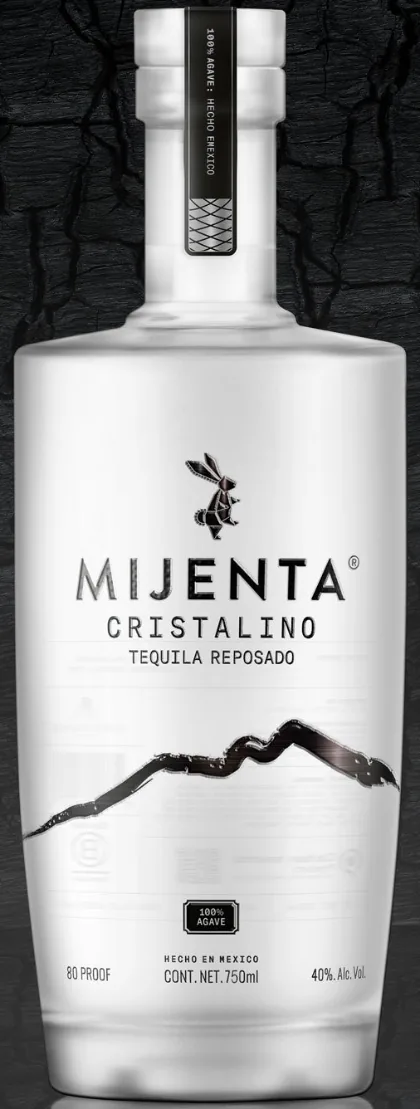
The first Symphony-barrel release was Mijenta Cristalino in 2024. Its marketed name is Cristalino, rather than Symphony No. 1. Symphony Series No. 2 followed in 2025 and No. 3 in 2026.
| Release | Class and strength | Maturation and finish | First US release |
|---|---|---|---|
| Cristalino First Symphony release | Reposado cristalino 40% ABV · 80 proof | About eight months in Symphony barrels, then charcoal filtration to remove color. NOM 1499. | 19 February 2024 |
| Symphony No. 2 | Reposado 45% ABV · 90 proof | About eight months in Symphony barrels. NOM 1412. | 10 March 2025 |
| Symphony No. 3 | Añejo 45% ABV · 90 proof | About 18 months in Symphony barrels. NOM 1412. | 23 March 2026 |
Each Symphony barrel combines oak staves from four states
Minnesota, Missouri, Pennsylvania and Virginia supply the oak staves assembled into each Symphony barrel. For Nos. 2 and 3, Mijenta describes a slow chaufferette toasting process in which water is sprayed repeatedly onto the wood during heating.
This differs from regular Mijenta Reposado’s blend of American oak, cherry and acacia casks. Añejo Gran Reserva uses American white oak, French oak, acacia and cherry. Symphony Nos. 2 and 3 share the four-state oak construction and toasting method, with eight and 18 months of maturation respectively.
Cristalino adds charcoal filtration after maturation. Our cristalino guide explains how the filtering step removes color.
Buying an earlier Mijenta release
On October 10, 2026, Mijenta’s US shop listed Maestra No. 2 at about $84 and Maestra No. 3 at about $100, both marked sold out. Check the edition number and available stock with the seller before ordering.
The Mijenta guide’s October 2026 US shop observations cover Cristalino, Maestra No. 3 and Symphony No. 3 alongside the regular range. Maestra Nos. 1 and 2 and Symphony No. 2 have no retail-survey entry there.
Earlier US launch prices · 750 mL
- Maestra No. 1: about $100 at its September 2024 launch.
- Maestra No. 2: about $75–85 at its September 2025 launch.
- Symphony No. 2: about $85 at its March 2025 launch.
US launch prices from Mijenta’s release announcements.
Prices are subject to change.
Sources and photographs
Product facts: the maker’s release announcements and product pages linked below. Retail price sources are in the Mijenta price comparison. Bottle photographs: brand and importer sources.
- Mijenta — Maestra Selection No. 1 launch, 2024Checked 2026-10-08.
- Mijenta — Maestra Selection No. 2 launch, 2025Checked 2026-10-08.
- Mijenta Maestra Selection No. 2 product listingUS shop price and sold-out status checked October 10, 2026.
- Mijenta Maestra No. 3 launch releaseChecked 2026-10-08.
- Mijenta — Cristalino launch, 2024Checked 2026-10-08.
- Mijenta — Symphony No. 2 launch, 2025Checked 2026-10-08.
- Mijenta — Symphony No. 3 launch, 2026Checked 2026-10-08.
- Mijenta — current product catalogueChecked 2026-10-08.
- CEA Jalisco — Región 04 CiénegaChecked 2026-10-08.
- AFLP analysis of three reproductive forms of Agave tequilanaChecked 2026-10-08.
- Marcadores moleculares ISSR para identificación de hijuelos de agavesChecked 2026-10-08.
- Luis E. Eguiarte — Genómica evolutiva y de la conservación en los agavesChecked 2026-10-08.
- Mijenta Maestra Selection No. 3 product listingUS shop price and sold-out status checked October 10, 2026.
Is Mijenta tequila kosher?
Yes, Mijenta’s unflavored, CRT-approved 100% agave tequila is acceptable as kosher under STAR-K’s guidance.†
† Check the specific Maestra or Symphony release and bottle label. STAR-K’s tequila guidance accepts unflavored, CRT-approved 100% agave tequila without certification. It prefers reliable certification for reposado, añejo and cristalino, and excludes mixtos and specified wine or cask labels. Check the full exclusions against the bottle; this general acceptance is separate from brand certification. Sources checked October 14, 2026. See Is tequila kosher? for bottle checks, agency differences and Passover requirements. ↩