
Clase Azul guide
Durango uses Cenizo agave, Guerrero uses Papalote and San Luis Potosí uses Verde agave. All three are unaged. Their bottles showcase different Mexican crafts, from Wixárika beadwork to Olinalá painting.
Explore the bottles ↓
Three mezcals, with different agaves and bottle crafts
Clase Azul’s three regular regional mezcals are named for their home states: Durango, Guerrero and San Luis Potosí. All three are unaged, with strengths of 44%, 42% and 43% ABV respectively.
Flavor notes below are the maker’s descriptions.
- Joven mezcal
Mezcal Durango
44% ABV
Unaged
$370 · 750 mL assumedUS shop price
Agave: Cenizo (A. durangensis)
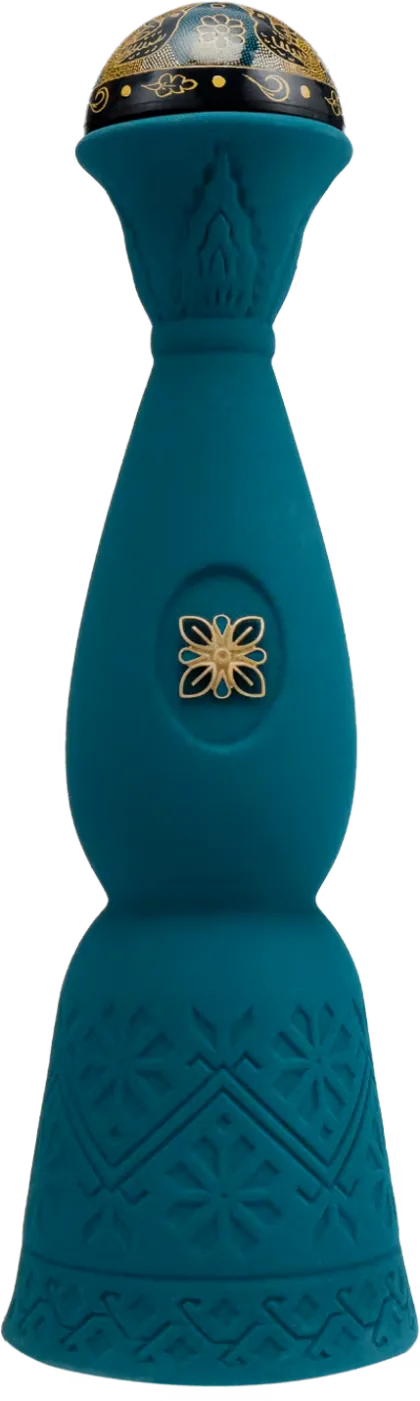
Bottle: Dark, textured ceramic inspired by black clay, with carved Mazahua decoration and a colorful Wixárika beadwork cap.
cooked agave, citrus, herbs, green olive, clove and roasted peanut.
- Joven mezcal
Mezcal Guerrero
42% ABV
Unaged
$370 · 750 mL assumedUS shop price
Agave: Papalote (A. cupreata)
Bottle: Jade green ceramic with four petal flowers; the painted cap depicts a hummingbird using Olinalá craft techniques.
grapefruit peel, rosemary, butter, fresh wood and lemon-pepper notes.
- Joven mezcal
Mezcal San Luis Potosí
43% ABV
Unaged
$390 · 750 mL assumedUS shop price
Agave: Verde (A. salmiana)
Production: Steam cooked in vaulted stone ovens, milled with a Chilean mill and distilled twice in copper stills.
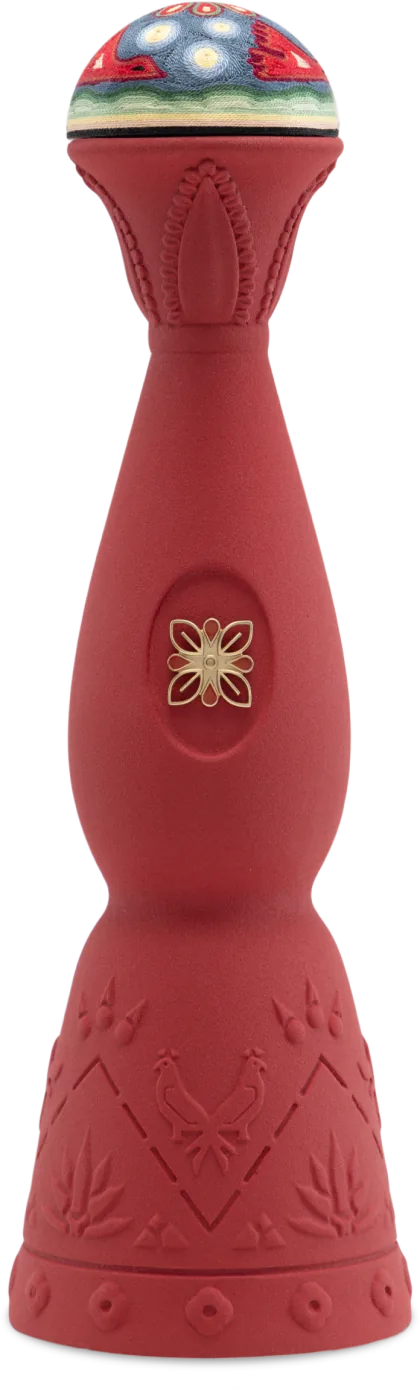
Bottle: Red ceramic honoring the Huachichil, with landscape and agave motifs and a red finch worked in colored yarn on the cap.
steamed agave, caramel, green chile, fresh grass, lime and clove.
Wild Cenizo, mountain Papalote and steamed Verde
Durango: Cenizo agave
Durango uses wild Cenizo, Agave durangensis. The original release in the mid 2010s was made by Ventura Gallegos, a mezcalero from Nombre de Dios who is also associated with Mezcal de Leyendas Cenizo.
Guerrero: Papalote agave
Guerrero uses Papalote, Agave cupreata, which grows wild in the state’s mountain ranges. This gives the comparison a different agave from Durango’s Cenizo and San Luis Potosí’s Verde.
San Luis Potosí: steamed Verde agave
San Luis Potosí uses Verde agave, Agave salmiana, and is made in Estación Ipiña. The agave is steamed in vaulted stone ovens, then milled with a Chilean mill and distilled twice in copper stills. Steam cooking makes this an interesting contrast with the earth pits used for many other mezcals.
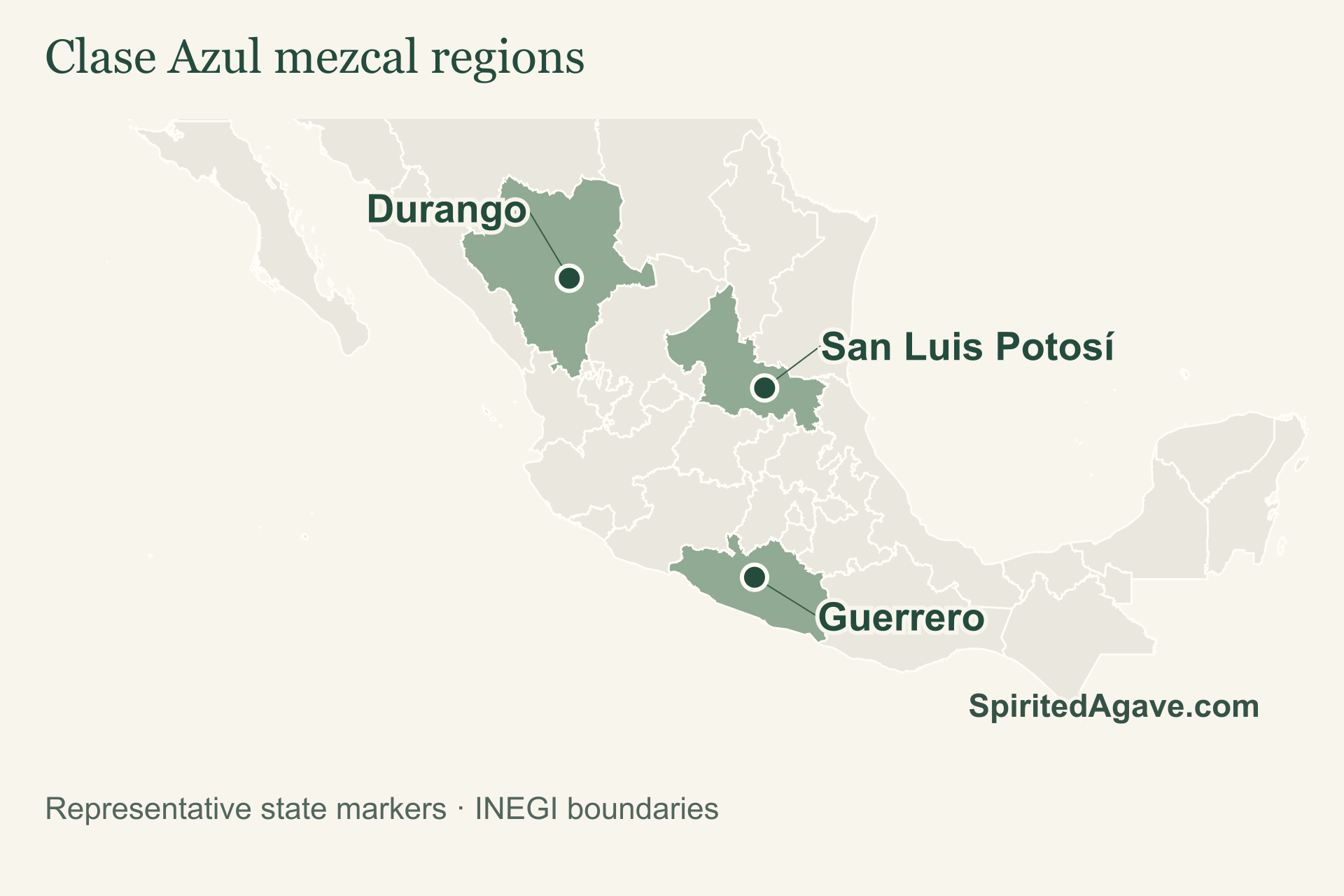
Clase Azul mezcal regions
Durango, Guerrero and San Luis Potosí each supply a different agave and a different expression.
Clase Azul mezcal prices
Old Town Tequila listed Durango and Guerrero at about $370 and San Luis Potosí at about $390 in our October 4–6, 2026 US check. The shop omits bottle size for all three; the table uses 750 mL assumptions supported by US listings. These are bottle purchase prices.
| Bottle and size | Purchase price (USD) |
|---|---|
| Mezcal Durango · 750 mL assumed | $370 |
| Mezcal Guerrero · 750 mL assumed | $370 |
| Mezcal San Luis Potosí · 750 mL assumed | $390 |
Prices are subject to change.
Price sources and details
Old Town’s Guerrero and San Luis Potosí listings showed both cart and sold-out controls on October 10, 2026; confirm availability with the shop. US state and retailer listings checked October 10, 2026 support the 750 mL assumptions shown above. Bottle formats vary by market: Clase Azul’s 2024 San Luis Potosí launch was 1 L, while its Japanese store offers 750 mL.
US bottle listings, checked October 4, 2026–October 6, 2026. Tax and delivery are extra.
- Old Town Tequila: Mezcal Durango, about $370 (750 mL assumed). In stock online. Checked October 4, 2026.
- Old Town Tequila: Mezcal Guerrero, about $370 (750 mL assumed). Stock unconfirmed. Checked October 6, 2026.
- Old Town Tequila: Mezcal San Luis Potosí, about $390 (750 mL assumed). Stock unconfirmed. Checked October 6, 2026.
Which Clase Azul mezcal should you try first?
Clase Azul’s own flavor descriptions suggest three starting points:
- Choose Durango for roasted peanut and cooked-agave notes alongside citrus and green olive. It is also the strongest of the trio at 44% ABV.
- Choose Guerrero for grapefruit, rosemary and fresh wood. Its reported lemon and pepper flavors make it the citrus-and-herb choice, with the lowest strength of the three at 42% ABV.
- Choose San Luis Potosí for green chile, fresh grass, lime and clove. Its steam cooking makes it the clearest choice if you want to explore mezcal without earth-pit roasting.
San Luis Potosí is the sensible starting point if pit-roasted flavors put you off mezcal. Steam cooking avoids roasting the agave over a fire; it does not guarantee how smoky a particular drinker will find the finished spirit. Our mezcal smoke guide explains the difference.
Is the decanter part of what you want?
The Wixárika beadwork, Olinalá painting and colored-yarn cap are substantial parts of these bottles’ appeal. A gift or display purchase can reasonably turn on which craft you want to keep. At around $370–390 in the dated shop examples, this is an expensive way to explore an unfamiliar agave if your main interest is drinking it.
Try a small neat pour of the exact expression before buying a bottle. To explore another Cenizo mezcal, compare Mezcal de Leyendas Cenizo from Nombre de Dios, made by José Ventura Gallegos. Both use Cenizo; Leyendas describes buttered popcorn, coriander and stone fruit, a useful comparison if Durango’s agave interests you.
Within the wider brand, Blanco Ahumado offers another example of smoky agave spirit: a tequila made with Azul agave (A. tequilana) cooked in an earth pit.
Are Clase Azul’s three regional mezcals additive free?
The additive status of Clase Azul Durango, Guerrero and San Luis Potosí remains unclear: we have not found an additive free statement covering these three mezcals.
Sources and earlier records
Clase Azul Asia: current official collection · Clase Azul Asia: distillates and decanters
Questions about Clase Azul mezcal
What agave does Clase Azul Mezcal Guerrero use?
Clase Azul Mezcal Guerrero uses Papalote, A. cupreata.
Is Clase Azul Mezcal San Luis Potosí made from Cenizo?
No. Clase Azul San Luis Potosí uses Verde agave, A. salmiana. Clase Azul Durango uses Cenizo, A. durangensis.
Are Clase Azul Durango, Guerrero and San Luis Potosí aged?
No. Clase Azul Durango, Guerrero and San Luis Potosí are all unaged mezcals.
How strong are Clase Azul Durango, Guerrero and San Luis Potosí?
Clase Azul Durango is 44% ABV, Clase Azul Guerrero is 42%, and Clase Azul San Luis Potosí is 43%.
More agave spirits to explore
Explore the places behind these bottles in our Durango, Guerrero and San Luis Potosí guides. Our Cenizo, Papalote and Salmiana profiles explain how their plants differ.
Return to the Clase Azul brand guide, see Clase Azul bottle and shot prices, or read about the espadín and tobalá mezcals in our Dos Hombres guide.
Sources and photographs
Product facts, flavor notes and decanters: Clase Azul. Historical Durango maker: Mezcalistas. Bottle photographs: brand and importer sources. Dated retail observations and bottle-size differences appear beside the prices.
- Clase Azul Asia: current official collectionChecked 2026-10-04.
- Clase Azul Asia: distillates and decantersChecked 2026-10-04.
- Clase Azul Asia: Mezcal DurangoChecked 2026-10-04.
- Clase Azul Asia: Mezcal GuerreroChecked 2026-10-04.
- Clase Azul Asia: Mezcal San Luis PotosíChecked 2026-10-04.
- Berry Bros. & Rudd: Clase Azul DurangoChecked 2026-10-06.
- Distiller: Clase Azul Mezcal GuerreroChecked 2026-10-06.
- Total Wine: Clase Azul Mezcal San Luis PotosíChecked 2026-10-06.
- Clase Azul: San Luis Potosí launch, February 2024Checked 2026-10-06.
- Mezcalistas: original Clase Azul Durango makerChecked 2026-10-06.
- Mezcal de Leyendas: CenizoChecked 2026-10-06.