
A tlachiquero is the person who collects sap, known as aguamiel, from the agave plant, usually to be fermented into the traditional Mexican alcoholic beverage called pulque.
Tlachiquero Mezcal is also the name of a mezcaleria and pulqueria in the Roma Norte neighborhood of Mexico City. The bar serves mezcal and pulque. The bar is named in honor of those who collect the aguamiel.
A Tlachiquero’s Collection Process
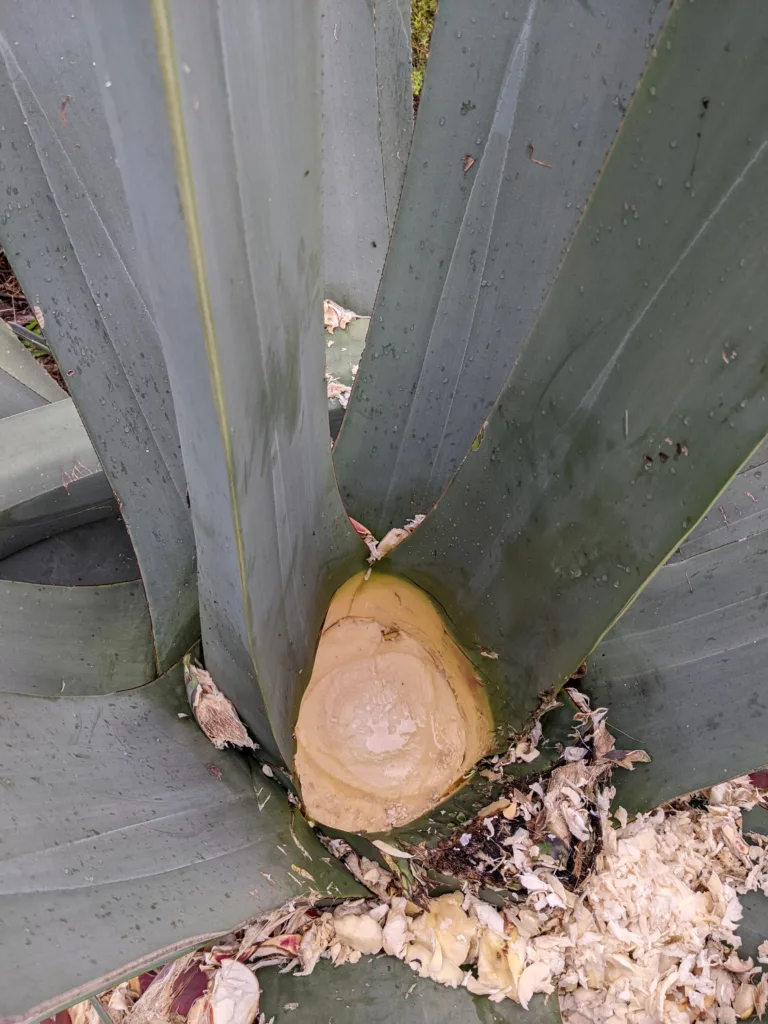
The tlachiquero prepares a mature maguey before it flowers, removing the developing flower bud and making a cavity in the plant’s center. Aguamiel gathers in this space. The sap is usually collected twice a day, and the cavity is scraped after collection to keep it flowing. In Spanish, raspar means to scratch or scrape. Following each scrape, the still-living maguey can produce one to three liters of aguamiel before the next collection. Aguamiel means “honey water” and is a sweet liquid. The amount collected varies with the plant and growing conditions.
The tlachiquero uses a tool called an “acocote” to suck the sap from the center of the plant. Acocotes were traditionally made from large oblong gourds. Today, plastic bottles and hoses are common.
After collection, aguamiel is placed in barrels and carried back from the fields by the tlachiquero, or often a donkey. It ferments in vats to become pulque, a process that can take hours or several days. The tlachiquero may also make the pulque; a person who makes it is called a pulquero.
The maguey will continue to produce aguamiel for several months, after which it dies.
Most pulque production is in central Mexico, especially Hidalgo, Tlaxcala, Estado de México and Puebla.
The maguey plants used for aguamiel extraction are huge, sometimes twice the height of a person. There are a few species of agave used by tlachiqueros for pulque, including Agave salmiana, Agave americana, Agave atrovirens and Agave mapisaga. Each of these species are also used for mezcal, along with many others.
Tlachiquero Definition, Translation and Origin
In English, tlachiquero means “a person who collects sap from agaves.” There is no direct English job title for this work. Women involved in aguamiel collection are called tlachiqueras.
The word “tlachiquero” comes from the indigenous language Náhuatl word tlachiquiliztli, meaning “to scrape something”, or “scrapings”.
Tlachiquero Pronunciation
The pronunciation of tlachiquero is “tlah-chee-KEH-roh”.
In the International Phonetic Alphabet (IPA): /tlatʃiˈkeɾo/.

Uses of Aguamiel
Fresh aguamiel can be drunk as a sweet sap beverage or fermented into pulque. Yeasts and bacteria already present in the sap take part in fermentation, and producers commonly add actively fermenting pulque to a fresh batch. Traditional pulque production includes collecting the sap, preparing the starter and fermenting the drink.
Pulque. This white fermented drink typically contains about 4%–7% alcohol. It is slightly viscous and can be slimy or lightly effervescent. People drink it straight or blend it with fruit, vegetables or other ingredients to make curados. It also goes into salsa borracha and pan de pulque. Its history reaches well before the Spanish arrived; Aztec and other cultures used it ceremonially.
Spirits. Pulque is sometimes, but rarely distilled, as in the case of Comiteco from Chiapas. There are some other brands, like Juerte, that make a spirit from pulque. Some mezcal brands are “mezcal de pulquero” but this just means that the mezcal has been made from magueys usually used for pulque, not from the pulque itself. Tequila and mezcal use a different production process which does not involve using aguamiel as a step.
Agave syrup/nectar. Aguamiel can be concentrated by heating to make miel de maguey, a thick sweetener. Most agave syrup is processed industrially from harvested agave hearts, called piñas. Their carbohydrates are extracted, broken down into simpler sugars and concentrated. A diffuser uses hot water to extract those carbohydrates. Salmiana is one of the magueys used for aguamiel and pulque.
