
Cupreata is a broad-leaved agave native to Guerrero and Michoacán, known as Papalote in Guerrero and Chino in Michoacán. Its green leaves have deeply scalloped edges and copper-colored spines. Growers raise it from seed and harvest its piña—the agave heart—for mezcal and other distilled agave spirits. 1, 3, 8
Cupreata at a glance
- Identity
- A. cupreata, in the asparagus family.
- Recognition
- Broad green leaves with narrow bases; deeply scalloped edges; copper-colored spines.
- Rosette size
- Leafy rosettes roughly 0.8–1.5 m high, with spreads of about 1–2.5 m.
- Native places and names
- Guerrero and Michoacán. Papalote in Guerrero; Chino in Michoacán.
- Uses
- Mezcal and other distilled agave spirits; food, living fences and household uses in Michoacán.
Recognize the broad blade, narrow base and copper spines
Look along an intact leaf from its base to its tip. A. cupreata’s green blade widens above a narrow base, then tapers to a strong terminal spine. Deep scallops carry conspicuous teeth along the edges. The leaves can reach a meter in length, with copper-colored teeth and terminal spines. 3
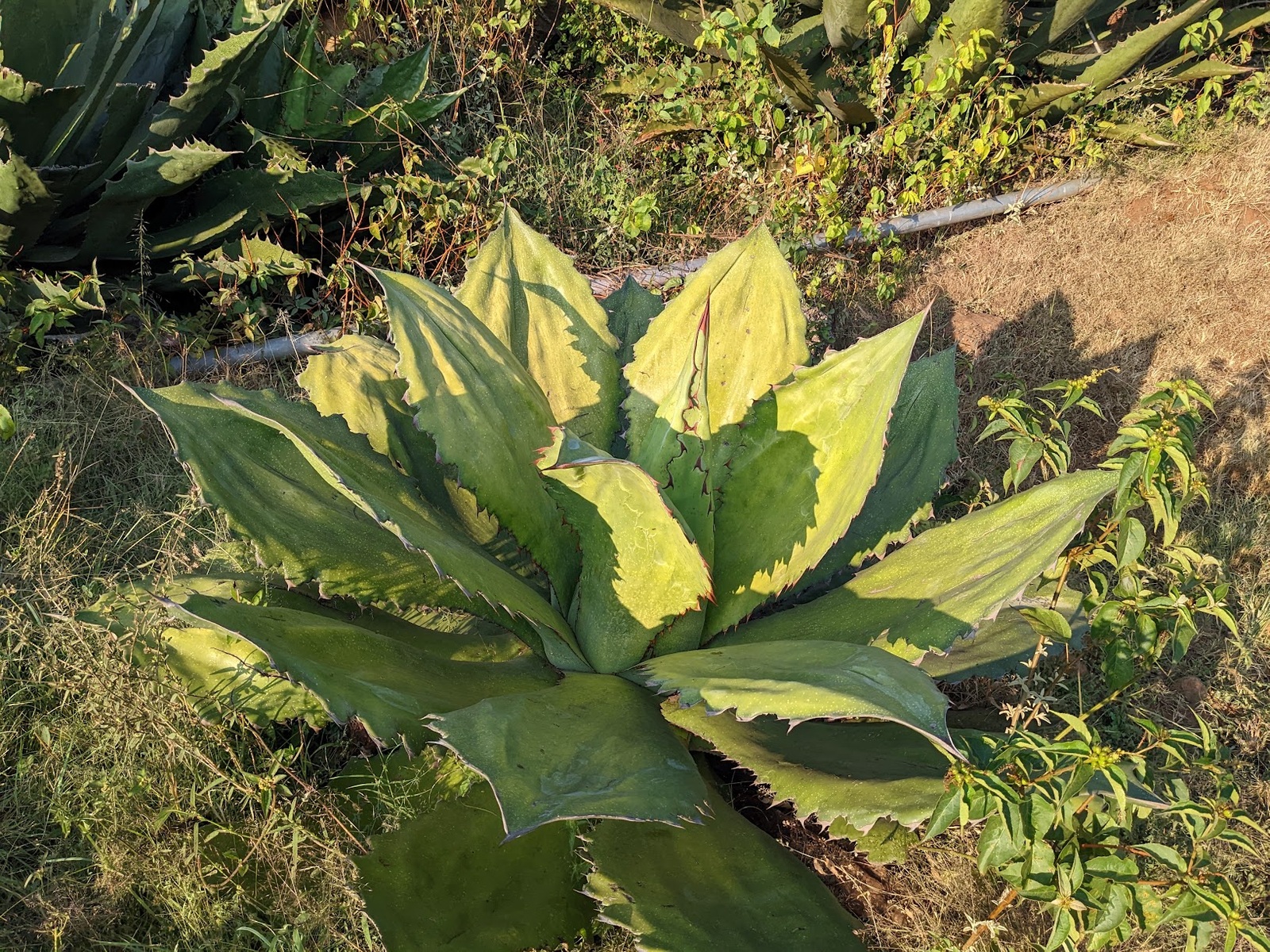
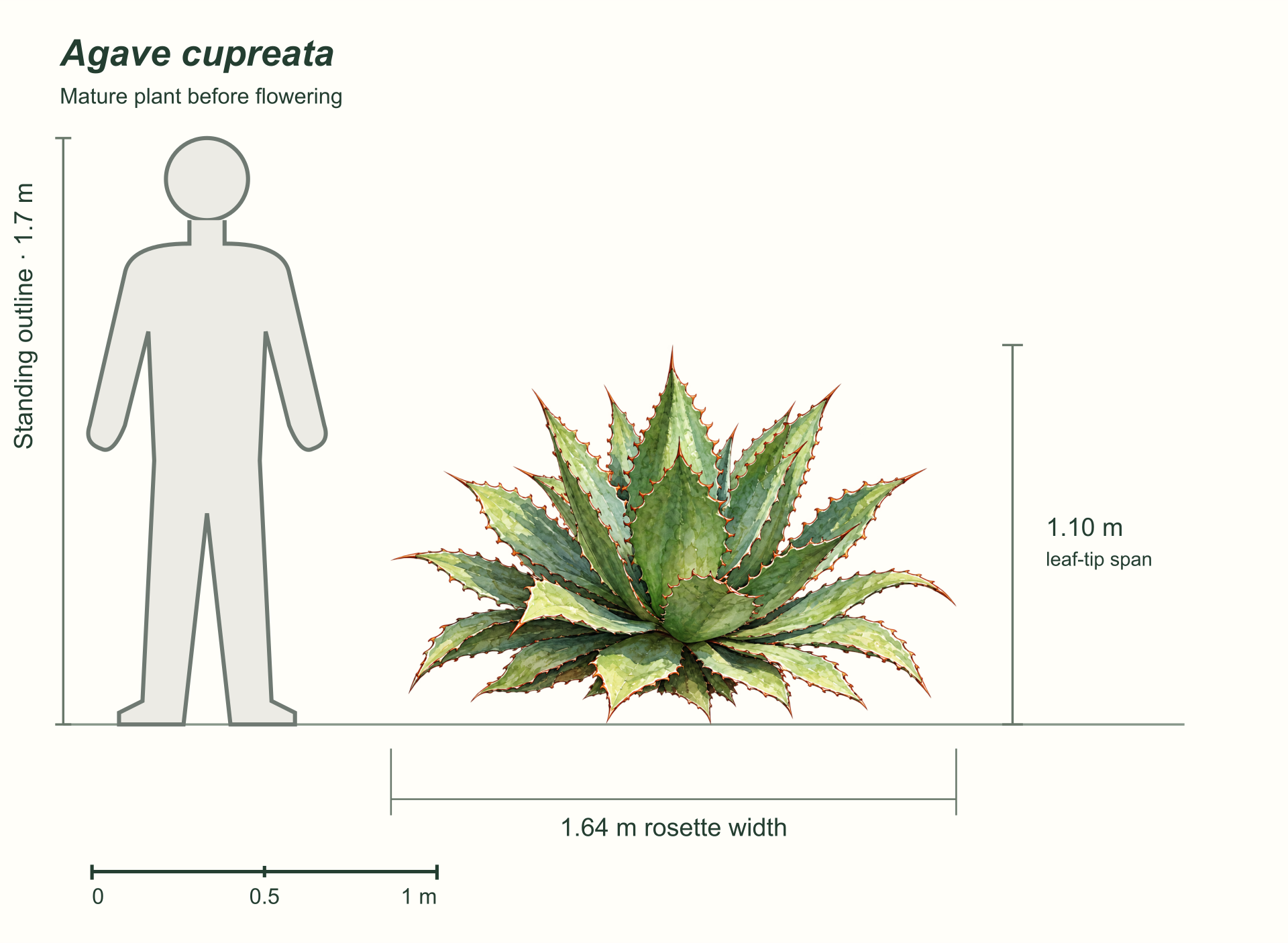
A. cupreata · before flowering
- Illustrated rosette: 1.10 m between the lowest and highest leaf tips × about 1.64 m wide.
- Standing person: 1.7 m. Meter bar: 1 m.
- The plant, person and bar share one scale.
Cupreata varies considerably in size. Smaller rosettes can be about 80 cm high and a meter wide; larger plants can spread more than two meters. Look for the same broad blades, narrow leaf bases and copper-colored spines across those different sizes. 2, 4
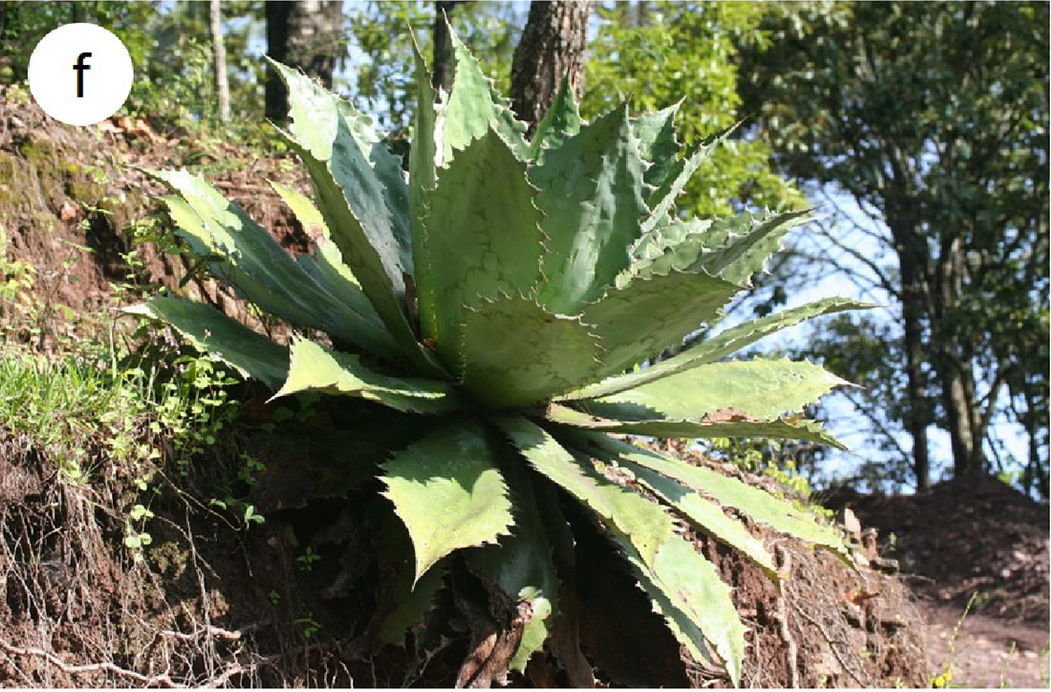
Broad blade, narrowing base
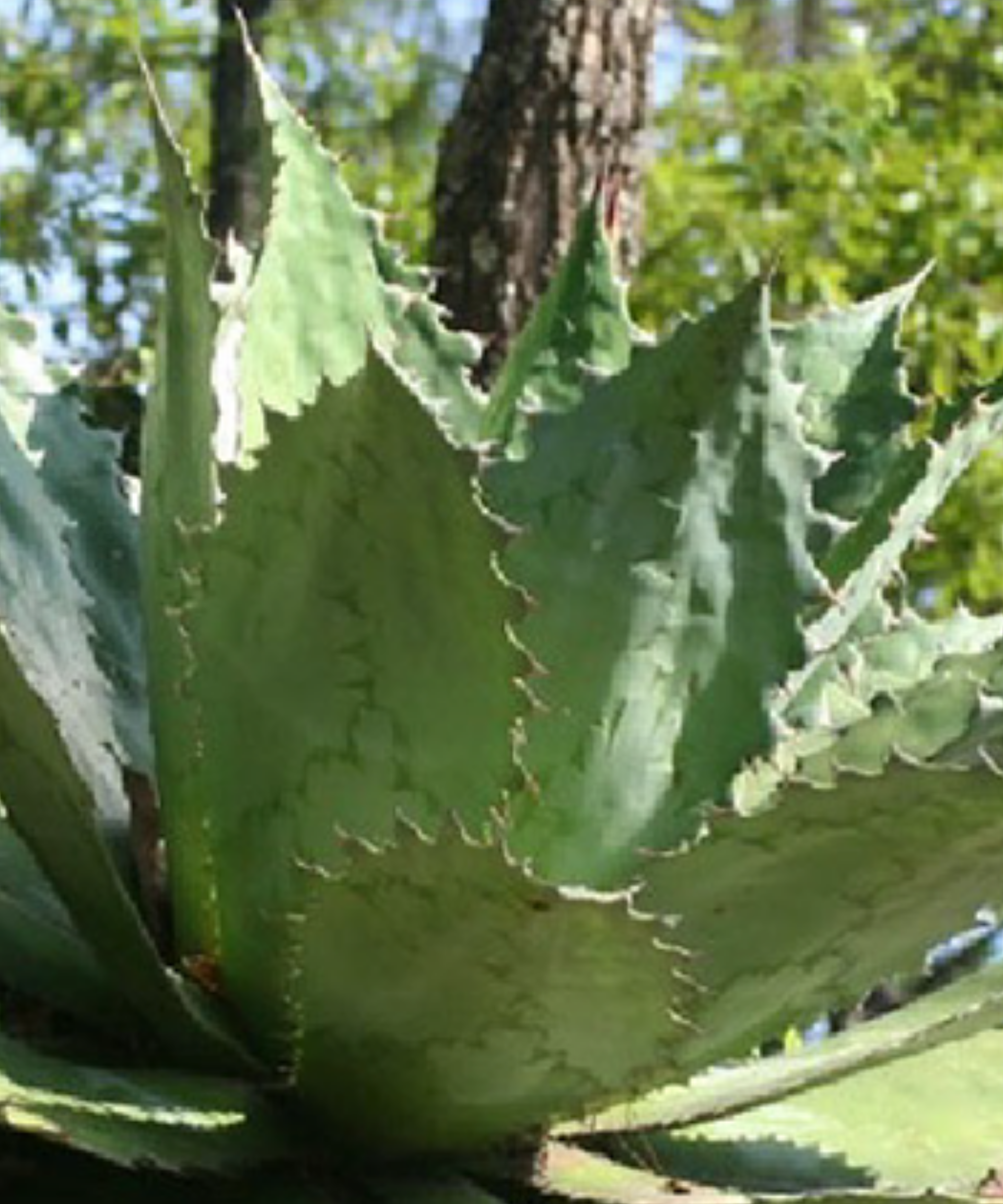
Scalloped edge and teeth
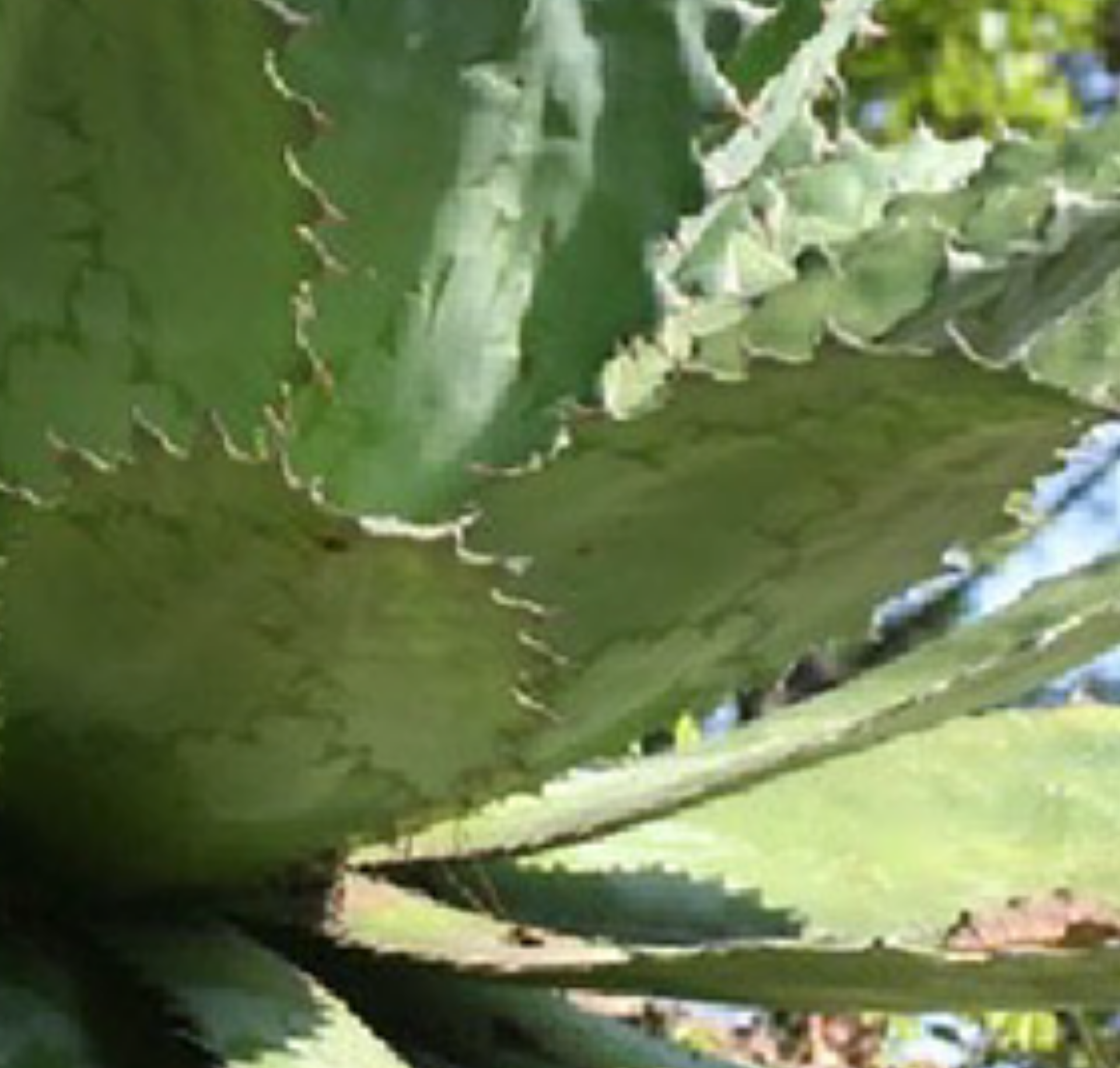
The two close-ups show the broad blade and scalloped edge. Each view is enlarged separately.
Cupreata has a larger rosette than Tobalá
A. cupreata and Agave potatorum, commonly sold as Tobalá, both have broad, toothed leaves. Tobalá is the smaller plant: its rosette is about 30–50 cm high and 40–60 cm across, with leaves 15–35 cm long. Its usually gray-green leaves contrast with Cupreata’s bright green blades and notably narrow leaf bases. 3, 5
Compare several intact leaves and the whole rosette. Young plants are smaller, and light and plant condition affect color. Cupreata grows naturally in Guerrero and Michoacán; A. potatorum grows in southern Puebla, west-central Veracruz and central Oaxaca. The Tobalá profile shows the smaller plant at human scale and explains its cultivation and regional names. 1, 17
Papalote in Guerrero, Chino in Michoacán
Papalote refers to Cupreata’s broad leaves, and Chino to their scalloped edges.
Papalote · Guerrero
Papalote is used around Ahuacuotzingo and Chilapa.
Erika Meneses’s April 2022 Aguerrido Papalote came from Tetitlán de la Lima, Guerrero.
Chino · Michoacán
In Tzitzio, Michoacán, Cupreata is called Chino.
Emilio Vieyra Rangel makes Don Mateo’s Michoacán Chino from Cupreata.
Papalote can mean a different agave in Puebla. Delfino Tobón’s Cinco Sentidos Papalote from San Pablo Ameyaltepec uses A. potatorum; Erika Meneses’s Guerrero Papalote uses A. cupreata. 12, 18
Papalometl is a Nahuatl name meaning “butterfly maguey.” The guide to agaves used for mezcal covers other regional names.
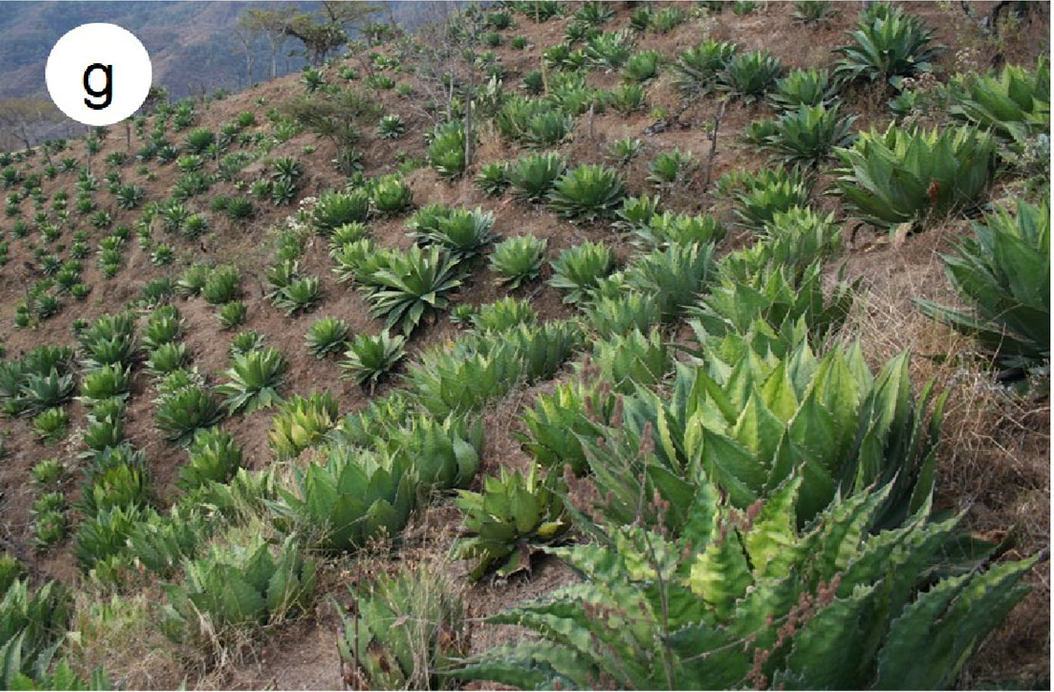
Seedlings, flowering and mezcal harvest
A. cupreata grows naturally from seed. It does not produce young plants around its base or on its flower stalk. Its branched flower stalk can reach six meters. The plant flowers once, then dies, so leaving some adults to flower and set seed supplies the next generation. Growers raise seedlings and help them establish in the field.
Cupreata can also be multiplied from pieces of stem in laboratory culture, using seed-grown nursery plants from Zitlala. In the field, flowering and seed supply the next generation. 19
Cupreata can take around seven–fifteen years to reach flowering maturity in Guerrero. Mezcal harvest ages vary: Don Mateo estimates six–nine years for its Michoacán Cupreata, while Erika Meneses’s April 2022 Papalote used 18-year-old plants. 6, 10, 12
For capón, the grower cuts the emerging flower stalk and leaves the plant standing before harvest. Erika’s Papalote spent two years this way. After distillation, the spirit rested for 14 months in glass. 12, 15
Don Mateo and Erika Meneses make cupreata differently
Mezcal starts with the harvested heart, or piña. It is cooked, broken up, fermented and distilled. Don Mateo and Erika Meneses both cook Cupreata in earth ovens, then use different fermentation vessels and stills.
Don Mateo · Michoacán
Emilio Vieyra Rangel’s cupreata · 46% ABV
- Cook in a conical earth oven lined with volcanic stone.
- Break up the heads with a mechanical shredder.
- Ferment with native yeasts in oak vats set into the ground.
- Distill twice in a Filipino-type still.
In a traditional Michoacán still, a cold-water bowl turns vapor back into liquid inside a wooden upper chamber. An internal gutter collects the spirit. 20
Taste: Don Mateo describes this expression as fruity and lightly smoky.
Erika Meneses · Guerrero
Aguerrido Cupreata Capón · Tetitlán de la Lima · April 2022
- Cook for four days in an earth pit, using Encino Amarillo wood.
- Ferment for six days in pine vessels with spring water.
- Distill twice in copper pots.
- Rest in glass for 14 months.
The release comprised 100 liters at 46.9% ABV, sold as destilado de agave.
Taste: Skurnik’s notes for this release include melon, lime and almond.
Skurnik describes black tea, damp earth, beeswax and pepper in Refugio Calzada’s 46.9% ABV Aguerrido cupreata. It is fermented for four days in pine, distilled in copper pots and rested for two years in glass.
Creador describes dried fruit, apple cider and cinnamon in its 48.3% ABV Tobalá Descansado. Its January 2019 spirit was distilled in clay and rested four years in glass, compared with copper and 14 months for Erika’s April 2022 Cupreata. The Tobalá profile explains Creador’s process.
Try a cupreata neat before making a cocktail: citrus can accompany a fruit-led expression, while an earthy bottle gives the drink a different center. Adjust sweetness and citrus around the spirit you actually have.
Papalote and Chino are small parts of certified mezcal production
Papalote and Chino are small categories in Mexico’s certified mezcal production: 0.41% and 0.40% respectively in 2025, compared with about 85% for Espadín. 7
Seedlings, pollinators and community care
Cupreata was classified as Endangered in its global assessment completed in 2018 and published in 2020. Wild populations were declining, with harvesting for mezcal putting particular pressure on plants in Michoacán. Population monitoring and harvest management are central conservation priorities. 21
Bats and birds carry Cupreata pollen as they visit flowering plants. In western Mexico, bats carried larger pollen loads and more pollen movement occurred at night. Protecting young plants from cattle can also help regeneration, although the benefit varies with the habitat. 6, 9
Nahuatl producers in Acateyahualco, Guerrero, worked with Grupo de Estudios Ambientales to monitor plants, plan harvests, rotate harvesting areas and control cattle. Michoacán communities raised seedlings in nurseries and planted them in woodland. Don Mateo also operates two seed nurseries. 8, 11
Food, fences and Cupreata’s history
In Michoacán, Cupreata has also supplied food, living fences, ornament, ceremonial materials and utensils. Leftover fibers from distilling have been used as fertilizer. 8
Don Mateo traces its family’s distilling tradition to 1840 and describes the current work as its sixth generation. Cupreata was formally named in 1915. A type specimen collected by E. Langlassé in Guerrero in 1899 is held in Paris. 11, 1, 14
Questions about cupreata
Is A. cupreata the same species as Tobalá?
No. A. cupreata and A. potatorum, commonly called Tobalá, are different species. Cupreata has a larger rosette with broad green leaves and narrow leaf bases. Tobalá is more compact, with shorter, usually gray-green leaves.
Does A. cupreata produce baby plants around its base?
No. A. cupreata grows naturally from seed and does not produce young plants around its base or on its flower stalk. Growers raise seedlings and leave some adult plants to flower and set seed. Cupreata can also be propagated from stem tissue in laboratory culture.
Source notes
Sources and dates
The plant-size figures combine the smaller CONABIO description with measured Guerrero rosettes from 2015. Producer examples retain their release dates. Papalote and Chino are separate categories in the 2025 certified-mezcal figures, reported at 45% ABV; blends are listed separately.
- Kew POWO, Agave cupreata
- CONABIO, Diversidad de magueyes
- Figueredo-Urbina, Casas & Torres-García (2017), PLOS ONE 12(11):e0187260
- Avendaño-Arrazate et al. (2015), Caracterización morfológica de Agave cupreata, Phyton 84:148–162
- García-Mendoza (2010), Revisión taxonómica del complejo Agave potatorum, Acta Botanica Mexicana 91:71–93
- Martin et al. (2011), Effect of habitat and grazing on the regeneration of wild Agave cupreata in Guerrero, Forest Ecology and Management 262:1443–1451
- COMERCAM, Informe Estadístico 2026
- Torres-García et al. (2019), The genus Agave in agroforestry systems of Mexico, Botanical Sciences 97(3)
- Arreola-Gómez & Mendoza (2024), Pollen movement of endemic Agave cupreata by bats and birds in western Mexico, Journal of Tropical Ecology 40:e10
- Don Mateo Cupreata
- Don Mateo, Nosotros
- Skurnik, Erika Meneses Cupreata Capon, Aguerrido
- Skurnik, Refugio Calzada Cupreata, Aguerrido
- MNHN, type P00712901
- Mal Bien, Refugio Calzada Hernández
- NOM-070-SCFI-2016, official published text
- Kew: Agave potatorum
- Cinco Sentidos: La Colección Mixteca
- Cupreata tissue culture, 2026
- CIATEJ–AGARED: Panorama del aprovechamiento de los agaves en México, 2017, p.173
- IUCN: Agave cupreata, assessed2018, published2020
- Creador: Tobalá Descansado