
Tobalá usually refers to Agave potatorum, a small agave with broad, toothed leaves native to Puebla, Veracruz and Oaxaca. Mezcal makers use both wild and cultivated plants, which take years to mature despite their small size.
In parts of Oaxaca, Tobalá also names Agave seemanniana, a larger plant with a more open rosette.
Tobalá at a glance
- Scientific name
- Agave potatorum Zucc.
- Common local names
- Tobalá, papalometl and papalomé in Puebla and Oaxaca; Papalote in parts of Puebla. Tobalá also names A. seemanniana in Oaxaca.
- Appearance
- A compact rosette with broad green to blue green leaves, wavy toothed edges and sharp terminal spines.
- Size
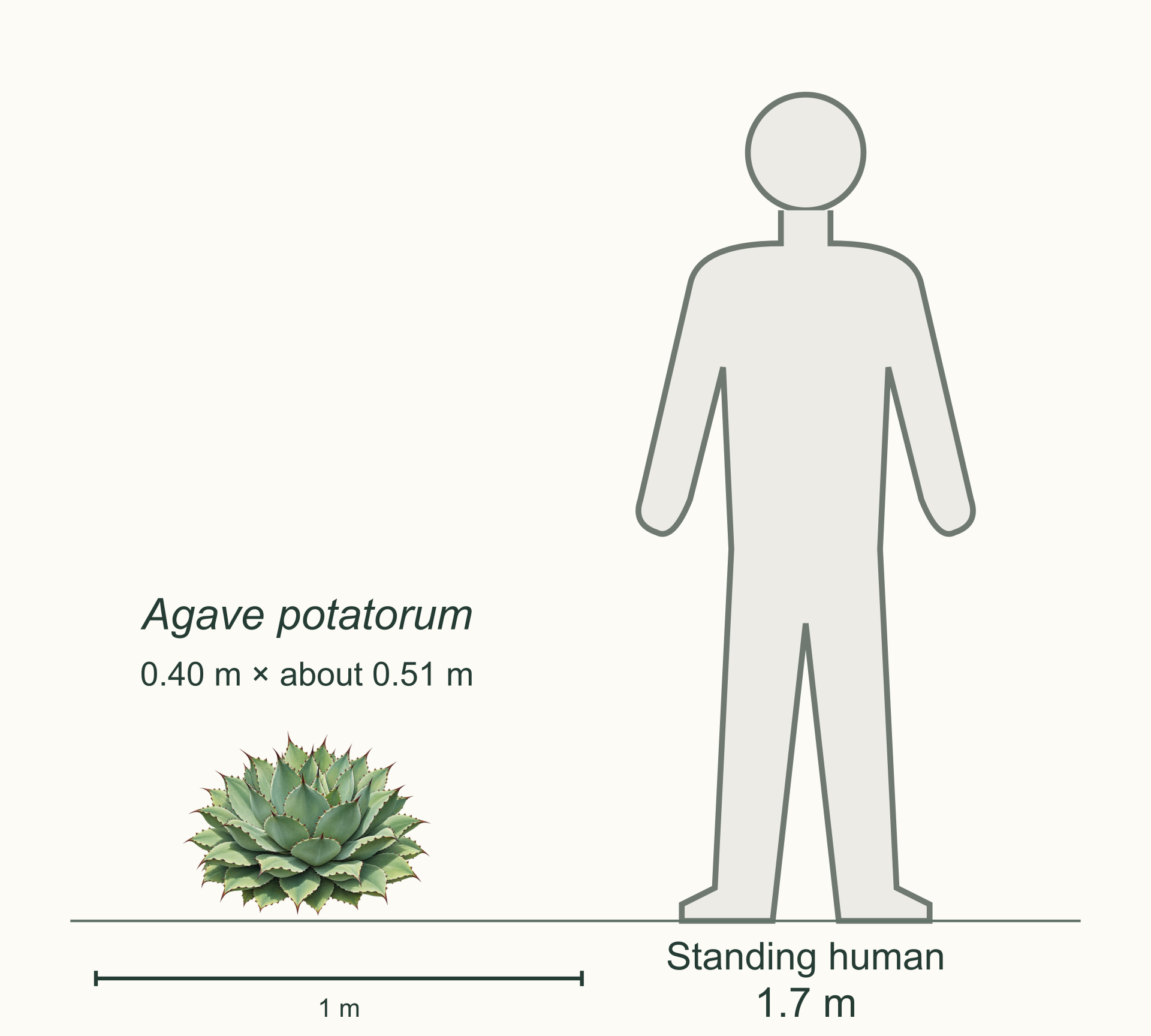
- The leafy plant is usually 30–50 cm high and 40–60 cm across. Its flowering structure, or inflorescence, is 3–5 m high, occasionally 6 m.
- Native range
- Southern Puebla, west central Veracruz and central Oaxaca.
- Uses
- Mezcal, edible flowers and young flower stalks, garden planting, and dry stalks used for fencing and storage platforms.
- Maturity estimates for mezcal
- Tobalá is harvested for mezcal at about 7–14 years.
Recognizing the small, broad-leaved rosette
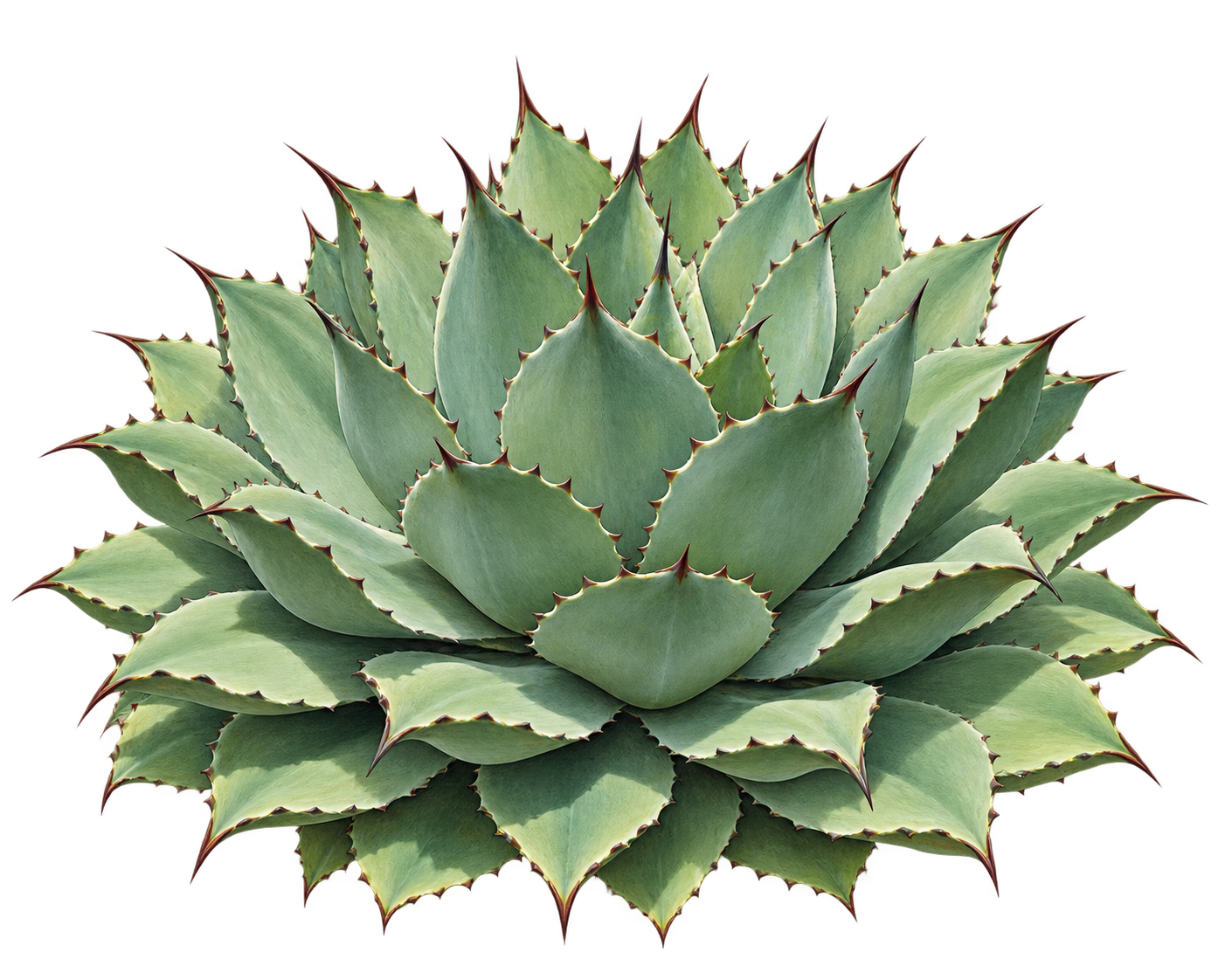
A. potatorum packs broad leaves into a dense rosette without an above ground trunk. The leaves widen through the middle or upper part, then narrow to a sharp brown or gray spine. Along their wavy edges, raised lobes carry conspicuous teeth. Together, those features give the plant its compact, layered outline.
The leafy plant usually grows 30–50 cm high and 40–60 cm across. Its flowering structure, or inflorescence, is 3–5 m high, occasionally reaching 6 m. Botanical description
Agave salmiana is much larger, with long, recurving leaves. Its rosette is commonly 2–2.8 m high and 2–5 m across, with some plants as short as 1.5 m. Regional flora, pp. 53–54
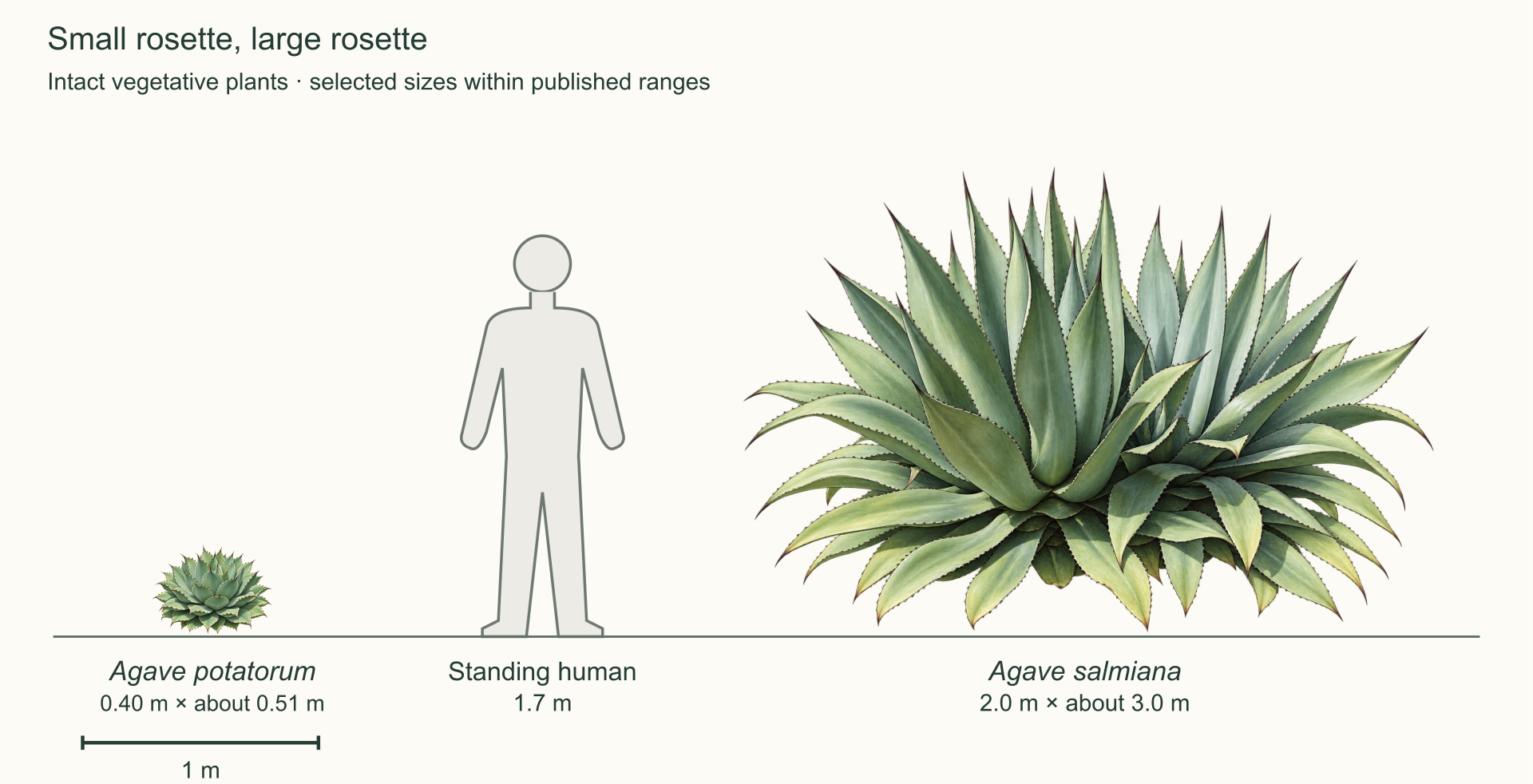
Enlarge the complete common-scale comparison
The Cupreata profile compares another broad-leaved agave. Agave cupreata has a larger rosette, bright green blades and notably narrow leaf bases. Its native range includes Guerrero, Michoacán and Oaxaca's Silacayoapam district. IUCN range assessment, CONABIO species account. A. potatorum grows farther east in southern Puebla, west-central Veracruz and central Oaxaca.
Where Tobalá grows and how its names overlap
A. potatorum is native to southern Puebla, west central Veracruz and central Oaxaca. In Puebla and Oaxaca, recorded habitats include dry woodland and cactus or oak scrub on limestone soils, at 1,300–2,400 m elevation. The plant occurs in the Tehuacán-Cuicatlán Valley, eastern Balsas basin, Mixteca foothills and mountains around Oaxaca's Central Valleys. Kew, Botanical revision
Tobalá is a Zapotec name used in Oaxaca. Papalometl and papalomé are Nahuatl-derived names meaning "butterfly maguey", from papalotl (butterfly) and metl (maguey). Papalote also comes from the Nahuatl word for butterfly. CONABIO names, Tehuacán naming study, p. 5, Papalote etymology
Tobalá and papalomé can name different agaves across Puebla and Oaxaca:
| Plant | Common local names and places | Plant or name distinction |
|---|---|---|
| A. potatorum | Tobalá, papalometl and papalomé in Puebla and Oaxaca | Compact rosette with many broad leaves |
| A. seemanniana | Tobalá, bilía, chato and papalometl in Oaxaca | Larger, more open rosette with longer leaves |
| A. nuusaviorum | Papalometl and papalomé in Oaxaca's Mixteca Alta | A separate species sharing the papalometl and papalomé names |
Papalote can mean A. potatorum in Puebla or A. cupreata in Guerrero. For example, Delfino Tobón uses A. potatorum for his Papalote mezcal in San Pablo Ameyaltepec, Puebla. Local usage varies by community. The agave names guide covers these overlaps across more species. Cinco Sentidos
Solsticio Terra's Tobalá is made from A. seemanniana in Oaxaca's Central Valleys. The agave is cooked in an underground conical oven, fermented in white-oak vats and distilled in copper. Solsticio Terra
Scientific names and range sources
The 2010 botanical revision uses the spelling A. nussaviorum; Kew accepts A. nuusaviorum. Flowering features help botanists distinguish the species. Kew species record.
For Agave cupreata, Kew lists Guerrero and Michoacán. The IUCN assessment includes Oaxaca, and the CONABIO species account locates its Oaxaca occurrence in Silacayoapam district. Kew Cupreata record.
From seed nursery to harvest
A. potatorum is grown from seed as well as gathered from the wild. Community nurseries in San Luis Atolotitlán and Caltepec, Puebla, have raised plants to replenish wild populations. Tehuacán Valley study
Ready for mezcal harvest at about 7–14 years
Maturity for mezcal means readiness to harvest the piña, the heart used to make the spirit.
The Tobalá used by Angelica Garcia Vazquez for Luneta in Chichicapam, Oaxaca, takes about 7–10 years to mature. Creador's Tobalá Descansado uses cultivated A. potatorum harvested at 12–14 years in Santa Ana Tlapacoyan. Real Minero and Noble Coyote also use 12-year agaves for their Tobalá expressions. Luneta, Creador, Real Minero, Noble Coyote
Real Minero's Tobalá is a capón: its emerging flowering stalk, or quiote, is cut before harvest. Growers use this practice to keep the plant's sugars in the piña. Capón explanation
A. potatorum flowers once, after an estimated 10–15 years, and reproduces mainly from seed, with occasional offsets, or hijuelos, that sprout from the parent plant. Bats pollinate its flowers. Leaving some plants to flower provides nectar and seed for future plants, alongside the work done in nurseries. Population research
Clay pots, wood vats and glass resting
To make mezcal, the piña is cooked and crushed into a mash. During fermentation, yeast turns its sugars into alcohol. Distillation heats the fermented mixture and cools the vapor back into liquid to produce the spirit. Creador uses clay pots for fermentation and distillation; Noble Coyote uses wood vats and alembic pot stills:
| Expression | Agave and place | Cooking and crushing | Fermentation and distillation |
|---|---|---|---|
| Creador Tobalá Descansado, batch JATD1122 | Cultivated A. potatorum, Santa Ana Tlapacoyan, Oaxaca; 12–14 years | Four to five days in a rock-lined pit with walnut wood; hand mallets and a wooden trough | Four to seven days in buried clay pots; twice distilled in clay pots; 48.3% ABV |
| Noble Coyote Tobalá | Wild and cultivated A. potatorum, San Luis Amatlán, Oaxaca; 12 years; Marcos and Eleazar Brena | Ground oven; mallets | Sabino-wood vats; two distillations in alembic pot stills; nominally 48% ABV, varying by batch |
Creador's Tobalá Descansado was distilled in January 2019 and rested four years in glass. Its maker describes aromas of fresh dates and caramel, apple cider and cinnamon flavors, and a fig and apple finish. Noble Coyote describes wood smoke, savory bacon, earth, orange peel and pepper in its Tobalá. Creador, Noble Coyote
The official Madurado en Vidrio class requires more than 12 months in glass, underground or with minimal changes in light, temperature and humidity.
Skurnik describes melon, lime and almond in Erika Meneses's 46.9% ABV Cupreata Capón from Tetitlán de la Lima. That April 2022 batch was fermented in pine vats, distilled twice in copper and rested 14 months in glass. Creador's Tobalá was fermented and distilled in clay and rested four years in glass, so the production methods and resting time differ as well as the plants. The Cupreata profile has more about Erika's mezcal. Skurnik
Tobalá follows Espadín and Cenizo in certified production
Tobalá (A. potatorum) accounted for about 1.8% of Mexico's certified mezcal volume in 2025, placing it third among the agaves reported individually. Espadín led with about 85%, followed by Cenizo (A. durangensis) at 2%. Mixed-agave blends accounted for about 6% and are counted separately. COMERCAM, Table 2, p. 7
Flowers, local materials and garden plants
The flowers and young flower stalks of A. potatorum are eaten. In the Tehuacán Valley, dry stalks are used for corral fencing and platforms for storing crop residues. The agave is also grown as an ornamental plant. Botanical revision, Tehuacán Valley study
The scientific name dates to 1832, when Zuccarini described plants grown in Munich from material sent by Karwinski. The Latin potator means "drinker". In 2010, García-Mendoza separated species that had previously been grouped under the potatorum name, using field and herbarium material. García-Mendoza, 2010
Questions about Tobalá
Is Tobalá always Agave potatorum?
No. Tobalá commonly names Agave potatorum in Puebla and Oaxaca, and also names A. seemanniana in parts of Oaxaca. A bottle's community and scientific name help identify its agave.
Can Tobalá be cultivated?
Yes. Agave potatorum, commonly called Tobalá, is raised from seed in nurseries and cultivated for mezcal. Creador's Tobalá Descansado uses cultivated plants from Santa Ana Tlapacoyan, Oaxaca; Noble Coyote reports cultivated and wild plants from San Luis Amatlán, Oaxaca.
Does Agave potatorum produce offsets or hijuelos?
Yes. Agave potatorum occasionally produces one to three offsets, called hijuelos in Spanish. These small offshoots grow from the parent plant; the agave reproduces mainly from seed. Botanical description
Is Tobalá used to make pulque?
Yes. Agave seemanniana, called Tobalá in parts of Oaxaca, is used for pulque in Miahuatlán and Tlaxiaco. Agave potatorum is principally used for mezcal. Botanical revision
More agave reading
Explore the agave names guide for local names and the mezcal classifications guide for the production categories on bottles.