
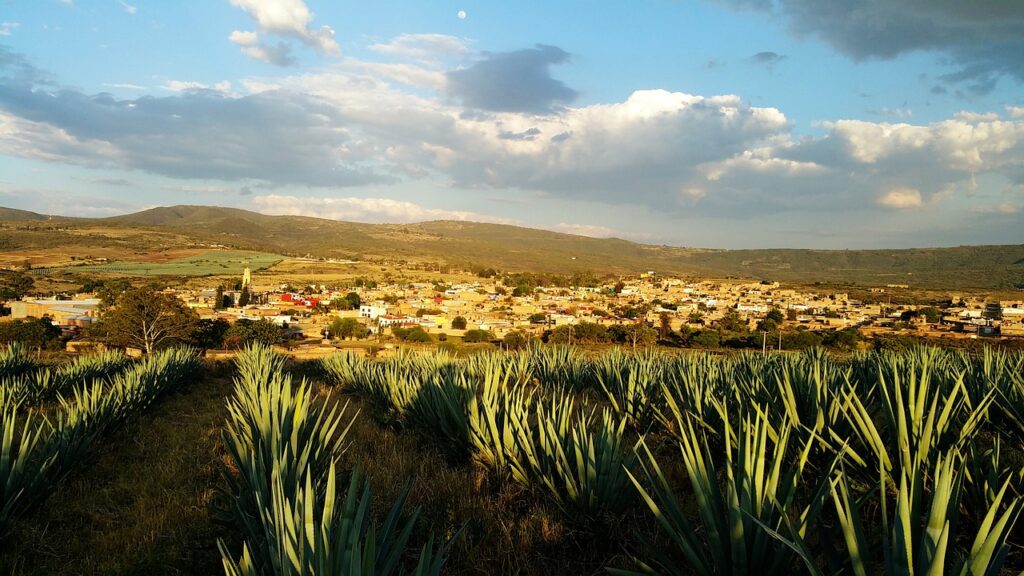
A growing number of people are choosing to eat (and drink) a plant based diet, so what does this mean for tequila – is tequila vegan friendly? Good news: tequila’s base ingredients are plant based, and plain blanco is a straightforward vegan choice. Aged tequila can be vegan too; the question is whether animal-derived ingredients or processing aids were used. Some mellowing additives can be used without being listed on the label; the rules and ingredient sources are explained below.
| Type of tequila | Blanco | Joven or Oro | Reposado / Anejo / Extra Anejo | Cristalino |
|---|---|---|---|---|
| Also called | Silver / white | Young / gold | Aged / Extra aged / Ultra aged | |
| Appearance | Transparent; not necessarily colorless | Goldish tint | Goldish to darker caramel color | Clear / colorless |
| Production treatment | Usually unaged; may spend less than two months in oak | Blanco blended with aged tequila or mellowing additives | Aged in oak barrels for a period of months to years depending on class | Aged tequila that has then been charcoal filtered to remove color |
| Is it vegan friendly? | Plain blanco is a straightforward choice | Can be; check ingredients and processing | Can be; check ingredients and processing | Can be; check ingredients and processing |
| Products with additives | Plain blanco excludes the four mellowing additives; flavored products have separate rules | Undisclosed additives are possible; seek the producer’s vegan statement | Undisclosed additives are possible; seek the producer’s vegan statement | Undisclosed additives are possible; seek the producer’s vegan statement |
What is tequila and how is it made?
Tequila is the distilled beverage of the blue agave plant, produced mainly from around the city of Guadalajara in the state of Jalisco, Mexico. It is one of several agave spirits which also include mezcal. Tequila is a protected term, much like champagne in France, and there are specific rules controlling how and where it is made.
Tequila is made from a distillation of the fermented sugars extracted from the core of the blue agave after hydrolysis, commonly by cooking. During fermentation, yeasts convert sugars into alcohol. The alcohol level reached during fermentation depends on the sugars, yeast and fermentation conditions; 6% is not a fixed maximum. The fermented juices must be distilled to reach higher levels and then water added to bring the alcohol content down to the 40% more common in tequila. Think of the simmering stage like reducing a soup, except that the distiller collects and condenses the vapor. That vapor is richer in alcohol than the liquid left behind, so the collected spirit becomes stronger. Tequila is typically distilled twice, with liquid from the first round used again; distillation columns are also used.
At least 51% of the reducing sugars by mass used to make tequila must come from blue agave. Mid-range and high end tequila is typically 100% agave, meaning all the fermentation sugars come from blue agave. Cheaper tequila often uses a portion of sugars from other sources, typically sugar cane. In all instances, the primary tequila ingredients are fully plant based and vegan friendly. But does that mean that all tequila is vegan friendly? Unfortunately not, as many tequilas contain additives which may not be vegan.
Learn more about how tequila is made and its history.
Are any additives used in tequila, and are there animal products?
Here’s where the problem may lie. The official tequila standard permits four categories of mellowing additives, called abocantes, subject to a 1% limit by weight before bottling. Unfortunately, these do not have to be individually named on the label, so the label alone may not tell you what was used. Plain blanco excludes these abocantes; flavored products have separate provisions. The four categories are:
- Oak extract
- Added as a shortcut to replicate the smells and tastes from the oak barrel aging process
- Produced from pieces of oak and extracted with alcohol
- Vegan friendly
- Glycerin
- Glycerin occurs naturally during fermentation. Manufactured glycerin used as an additive can come from vegetable oils, animal fats or other production routes; distillation is a purification step, not what creates it
- Used to create a “thicker” feeling in the mouth when sipped
- May not be vegan friendly, if using animal derived glycerin
- Caramel coloring
- Adds color to replicate the oak barrel aging process
- Caramel coloring is made by heating carbohydrates such as sugars. Caramel itself does not require milk, although caramel candies and sauces can contain milk, cream or butter
- Most likely vegan friendly but read below discussion on sugar syrup
- Sugar syrups
- Adds sweetness to finished product
- From natural sources, e.g. agave nectar, cane sugar
- Aspartame and sucralose (used in Splenda Original) are separate high-intensity sweeteners, not types of sugar syrup
- May not be vegan friendly
Sugar syrups may not be vegan
For tequilas using sugar additives, the bottle’s label may not tell you whether the sugar is vegan friendly. White sugar is sometimes refined using bone char which would make it not vegan friendly. Tequila may contain sucralose, the sweetener used in Splenda Original. Sucralose itself is not animal-derived, but its development involved animal testing. Readers who avoid ingredients tested on animals will also want to avoid sucralose. Unrefined sugars and sugars labeled as USDA Certified Organic do not use bone char in their production and will be vegan friendly.
How can I tell if my tequila is vegan?
For a quick choice, stick to plain blanco. For confirmation about a particular bottle—including sugar refining or filtration—look for a vegan statement from its producer. The standard defines blanco as without the four mellowing additives, or abocantes. That rule applies to plain blanco; check flavored products separately. Aged tequila may contain undisclosed additives, and some can be animal-derived. Be careful of cristalino tequilas: their clear appearance does not establish which ingredients or processing aids were used.
Understandably, the addition of undisclosed additives to tequila is controversial among purists. The program founded by the Tequila Matchmaker team is now run by the independent Additive Free Alliance. It tests retail samples for selected additives and explicitly says this is not certification. An additive-free listing does not verify vegan production, including how sugar was refined or which processing aids were used. If a brand is absent, that does not prove it uses additives. Check the current program rather than relying on an old count of listed brands.
But what if it says 100% agave on the label?
Aged tequila products may still have additives which do not have to be disclosed on the label. Brands can still advertise 100% agave even if the bottles do contain additives. “100% agave” describes the source of the fermentation sugars, not a promise of zero finishing additives; permitted abocantes remain subject to the weight-based 1% limit. Because of this loophole there’s a chance that even if the label says 100% agave it is not vegan friendly tequila.
Be careful, tequila blended bottles may state something like “mixed with 100% agave” but can also contain honey or dairy products making them not suitable for vegans.
What about the worm?
Despite common thinking products sold as tequila never have a worm inside but some bottles of mezcal do. Mezcal is another regulated agave spirit made in Mexico. Certain bottles of mezcal are sold with a “worm”, actually a moth larva, and so are obviously not vegan friendly. Some brands of non-vegan mezcal even come with scorpions inside the bottle. A pechuga mezcal can be distilled with turkey or chicken breast (pechuga means “breast” in Spanish) or other animal products like deer. Pechuga made with meat is not vegan. Some producers also sell explicitly vegan pechugas made with fruit, herbs or roasted agave. Unless the producer confirms that version is vegan, steer clear. One example is Pelotón de la Muerte’s Vegan Pechuga, whose product sheet lists cooked agave, fruit and herbs.
Are animals used in the production of tequila?
Animals are not usually used in the production of tequila. Making tequila is largely an industrialized process using machines. However animals are more commonly used in the production of mezcal, typically a mule or donkey is used to help crush the roasted agave cores before fermentation. Mules and donkeys are also used to carry the cut agave centers in from the fields and also to carry the wood for roasting the agave.
What about other tequila based products?
Flavored tequila and tequila-based liqueurs or creams need separate checks. The tequila standard has specific provisions for flavorings and labeling; adding more than 1% of an ingredient does not automatically turn every product into a liqueur. Common ingredients that are not vegan friendly include honey and dairy products used in tequila cream liqueurs.
So, is tequila vegan?
Plain blanco is a straightforward vegan choice. Aged tequila can be vegan too, but its additives and processing need checking. Neither “100% agave” nor an additive-free listing is vegan certification. For confirmation about a particular bottle, look for the producer’s vegan statement, including its use of ingredients and processing aids.
Sources:
Consejo Regulador del Tequila: production, categories and classes
PETA: sugar and bone-char refining
https://internationaltequilaacademy.com/tequila-additives-complete-guide-2020/
https://www.experienceagave.com/2014/05/mexico-bans-additives-in-blanco-tequilas/
Additive Free Alliance: current process and certification limits
USDA: glycerin technical evaluation (2013); Sethness Roquette: caramel color and caramel confections
Splenda: animal-derived ingredients; FDA oral history: sucralose animal studies, page 66
Arrizon and Gschaedler (2002): agave fermentation at different sugar concentrations