
40% ABV (80 proof) is common among major tequila brands, but strength varies by expression and market. Tequila must be bottled at between 35% and 55% ABV according to official regulations. If sold in the US it must be at least 40%. Tequila sold in Mexico is commonly 38%.
How Much Alcohol in Tequila?
- Certified tequila must be between 35% and 55% ABV.
- Many familiar US tequila bottlings are 40% ABV (80 proof); some expressions are stronger.
- The minimum ABV for tequila sold in the USA is 40%.
- Independent brands are more likely to have higher proof releases at 46%-55% ABV.
- Non-certified tequila (known as destilado de agave, or agave spirit) can be 60% or more ABV and is sometimes labeled as “puntas”.
- Mezcal typically has a higher ABV than tequila.
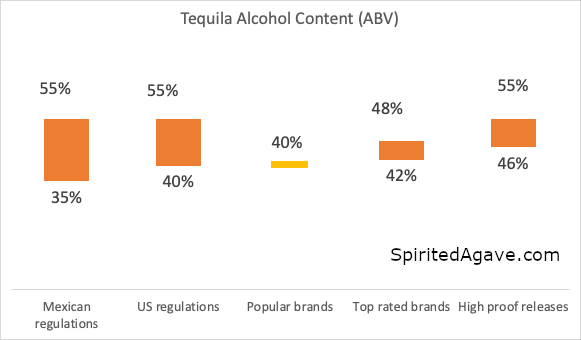
Table of Contents
Certified Tequila Must be Between 35% and 55% ABV
Tequila must be between 35% and 55% ABV according to the official regulations for tequila. Spirits bottled outside this range cannot use the term “tequila” and must be referred to as destilado de agave, licor de agave, or agave spirit or similar.
Tequila sold in the US must be at least 40%
Tequila must be at least 40% ABV when sold in the US according to the Alcohol and Tobacco Tax and Trade Bureau (TTB) rules. These rules apply to all spirits, not just tequila. So in the USA, certified tequila must be between 40% and 55% ABV.
Minimum ABV for Tequila around the world
The minimum ABV for tequila in the UK and the European Union is 35%. Most other spirits have 37.5% as the minimum in these regions, but tequila is not specifically mentioned in the relevant regulations, so the Mexican rules apply.
The minimum ABV for tequila in Australia and New Zealand is also 35%. Until recently the minimum was 37%. The minimums for most spirits in these countries is still 37% but this was changed for tequila to align with the geographical indication / appellation of origin for tequila.
- Mexico: 35%
- USA: 40%
- European Union: 35%
- Canada: 35%
- Australia: 35% (previously 37%)
- New Zealand: 35% (previously 37%)
- UK: 35%
40% ABV Is Common, with Stronger Options
Patrón lists its Silver, Reposado and Añejo at 40% ABV in its US range. That strength does not apply to every expression: Patrón Ahumado Silver is 41% ABV. Compare the exact expression and market when choosing a bottle.
A brand can bottle its standard tequila at 40% ABV and offer stronger expressions alongside it. For example, 1800 lists High Proof Blanco and High Proof Reposado at 45% ABV (90 proof). Casa Lunazul introduced Primero Reposado at 45% ABV in selected US markets in May 2025. These strengths belong to those specific expressions. Compare this to bourbon where many of the top selling brands bottle at 45% for their base expressions (for example Maker’s Mark and Evan Williams). Major bourbon brands all have even higher proof releases in their line ups.
Patrón also lists Patrón 100 at 50% ABV (100 proof). Its US website still marked the product “coming soon” when checked on October 3, 2026.
ABV Examples from Familiar Tequila Brands
Impact Databank’s US ranking for 2025 lists, in order, Jose Cuervo, Don Julio, Lunazul, Patrón, 1800, Casamigos, Espolòn, Hornitos, Teremana and Cazadores. Shanken News Daily published the figures on June 15, 2026. The table compares US bottles from these ten brands and four others, using strengths listed by the brands or Virginia ABC as of October 3, 2026.
| Brand | US expression | ABV (US proof) |
|---|---|---|
| Jose Cuervo | Tradicional Blanco | 40% (80 proof) |
| Patrón | Silver | 40% (80 proof) |
| Don Julio | Blanco | 40% (80 proof) |
| Casamigos | Blanco | 40% (80 proof) |
| 1800 | Blanco | 40% (80 proof) |
| Hornitos | Plata | 40% (80 proof) |
| Gran Centenario | Plata | 40% (80 proof) |
| El Jimador | Silver | 40% (80 proof) |
| Espolòn | Blanco | 40% (80 proof) |
| Olmeca Altos | Plata | 40% (80 proof) |
| Cazadores | Blanco | 40% (80 proof) |
| Sauza | Hacienda Silver | 40% (80 proof) |
| Lunazul | Blanco | 40% (80 proof) |
| Teremana | Blanco | 40% (80 proof) |
Why is Most Tequial 40% ABV?
40% ABV is the minimum alcohol content required for spirits in the US. Tequila comes off the still at higher ABV and is then diluted down with water before bottling. By using the maximum dilution more tequila can be produced for cheaper for two reasons:
- More bottles can be sold from the same amount of agave by watering it down
- Lower taxes in areas where tax is linked to the alcohol volume
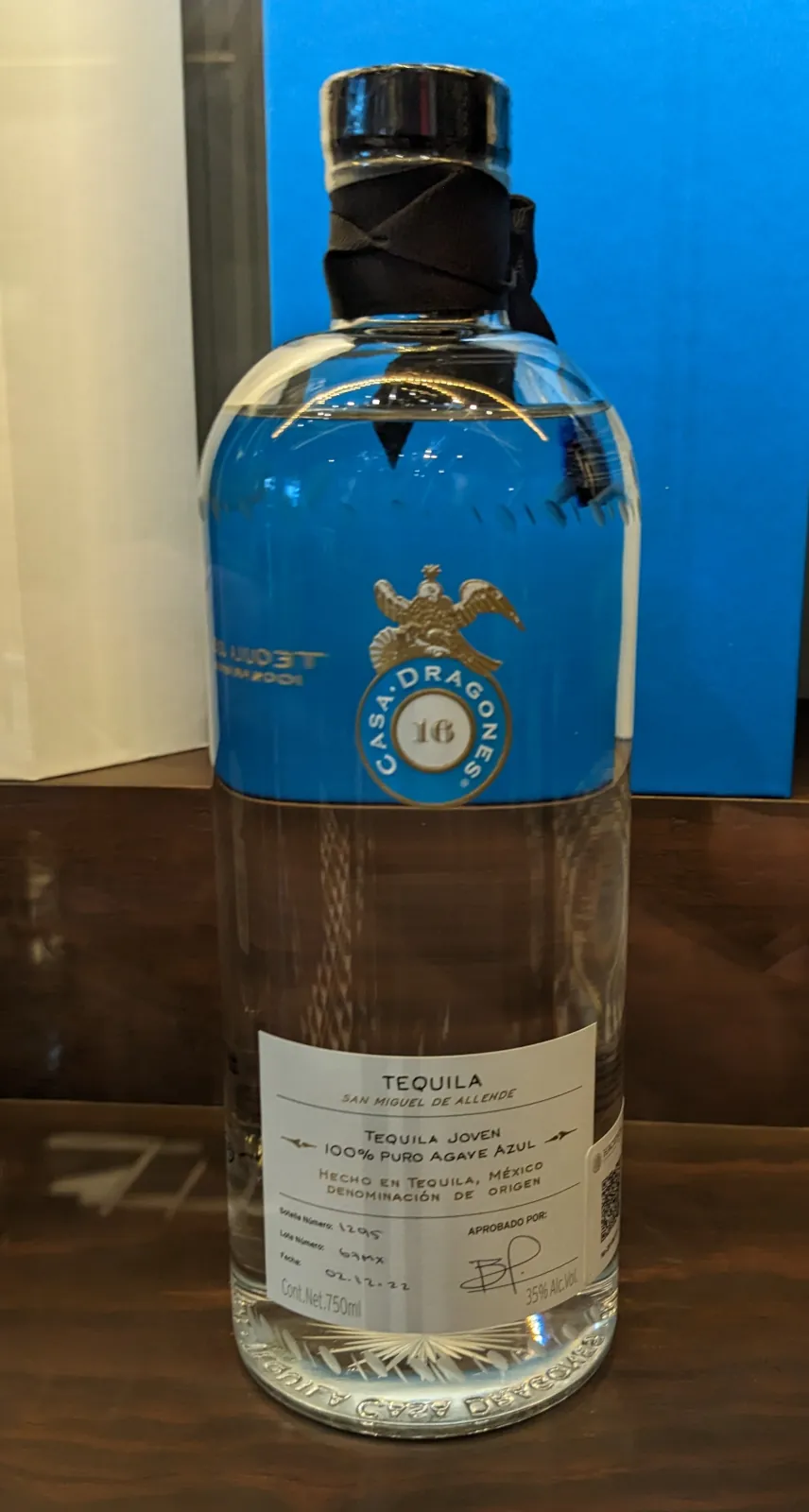
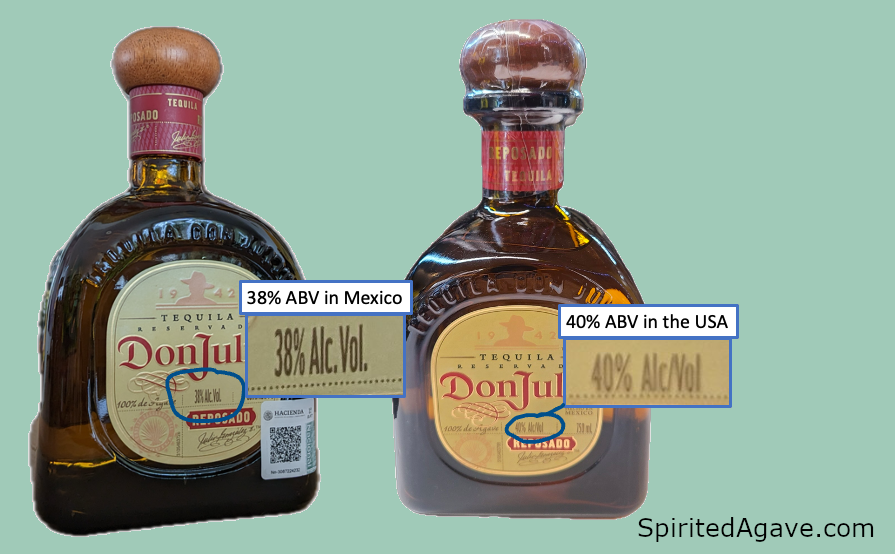
Tequila is Often 38% or 35% ABV in Mexico
The same brands typically bottle tequila at 38% in Mexico to lower costs even more. There are even popular, and premium expressions like Don Julio 70 Cristalino which is bottled at 35%. This is the absolute minimum to still be called tequila. The average cristalino drinker prioritizes a “smooth” tequila and watering it down sure does smooth it out.
Producers can sell 14.3% more tequila from the same batch by bottling at 35% instead of 40%. And if they use 700 ml bottles instead of 750 ml (don’t get me started) the gains are 22.4%!
Some argue that because tequila comes from Mexico, and Mexicans drink it at 38% or less they should know best. I don’t buy this at all. Especially coming from a mezcal drinker, where craft-focussed producers often bottle at around 50%.
Independent Brands Have Higher Proof Tequilas
It is more common for smaller independent brands to have higher proof expressions alongside their main tequilas. Sometimes these are called “still strength”, refering to the idea that they are bottled at the ABV they come off the still.
Distilate straight from the still is usually over 55% ABV. The tequila regulations limit the ABV for tequila to 55%, so in reality these “still strength” tequilas have had water added post distilation.
Brands with higher proof tequilas include:
- Herradura Blanco 92 – 46% ABV
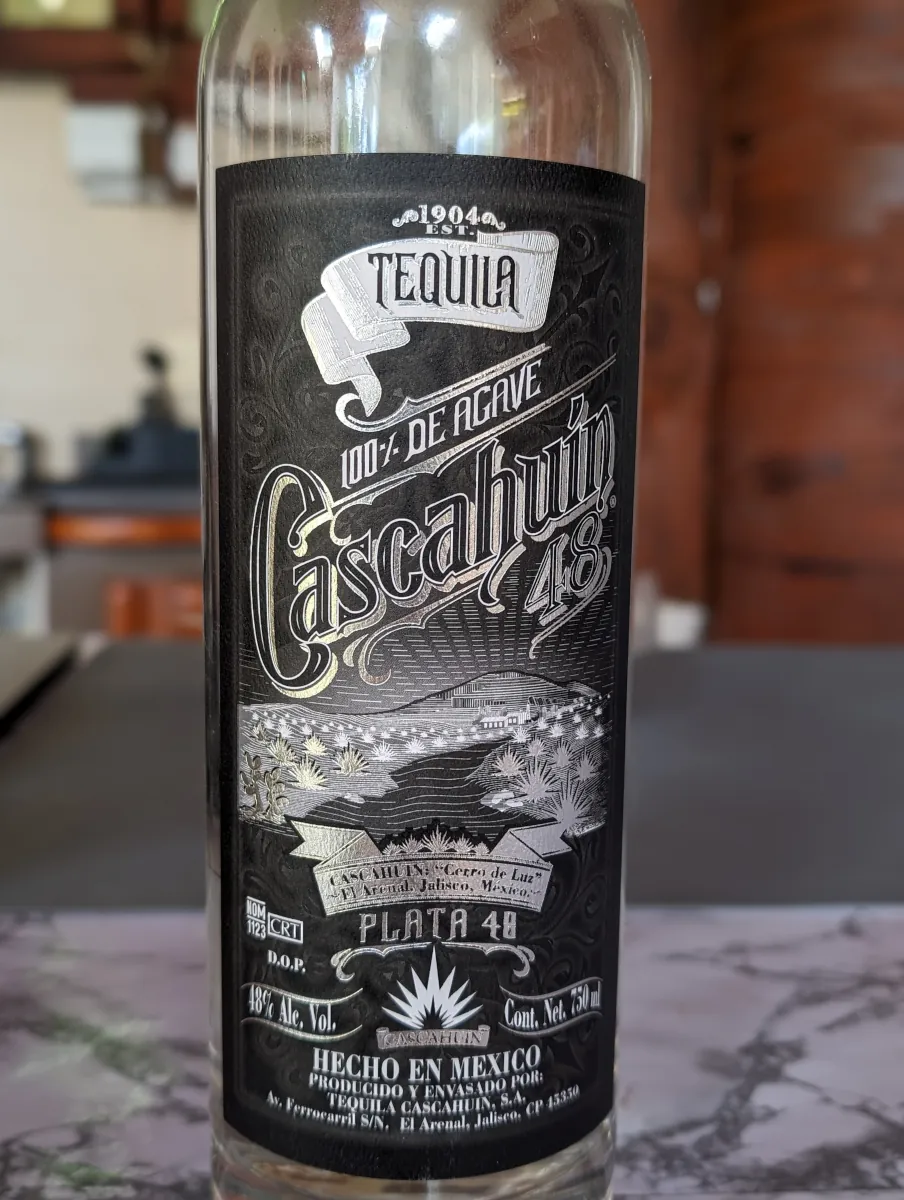
- Cascahuín Plata – 48% ABV
- Wild Common Still Strength – 50% ABV
- Fortaleza Still Strength – 46% ABV
- G4 108 – 54% ABV
- Tapatio 110 – 55% ABV
- Arette Fuerte – 50.5%
Higher Rated Tequilas Have Higher ABVs
Looking at the top rated tequilas on popular review website Tequila Matchmaker, most have higher ABVs. These tend to be special releases. The are often classified as “still strength” or borrow from mezcal nomenclature as “puntas”.
High rated blancos tend to have higher ABVs than high rated reposados and añejos.
ABVs of Top Rated Tequilas Brands
| Top Blancos ABVs | Top Reposado ABVs | Top Añejo ABVs | |
|---|---|---|---|
| Average | 48.3% | 42.4% | 43.6% |
| Highest | 54.5% | 46% | 51% |
| Lowest | 40% | 40% | 40% |
| Over 40% | 9 out of 10 | 5 out of 10 | 5 out of 10 |
I looked at the top 10 rated tequilas with more than 50 reviews.
Tequila ABVs vs Other Spirits
Is Tequila Stronger Than Other Spirits?
Strength depends on the bottle. A 40% ABV tequila has the same alcohol concentration as a 40% vodka, rum or whisky; a higher-proof tequila is stronger than those 40% bottlings.
I looked at the ABVs of top selling brands in the major spirit categories: vodka, American whiskey, Scotch, gin and rum. I took the five top selling brands in each category and looked at their ABVs in the US. Gin had the highest ABVs.
The selected base bottlings of tequila, vodka and Scotch in this comparison are 40% ABV. The top selling brands of American whiskey/bourbon have ABVs of 40% (Jim Beam and Jack Daniel’s) or 45% (Makers Mark, Evan Williams and Bulliet).
The top selling brands of gin mostly have ABVs above 40% (including Beefeater, Tanquery and Bombay Saphire). Seagrams and Gordons are at 40%, the same ABV as the tequila bottlings selected in this comparison.
Most top selling rum brands are 40% ABV (Bacardi, Appleton’s Estate, Captain Morgan and Diplomatico). Sailor Jerry is at 46%, stronger than the 40% tequila bottlings selected in this comparison.
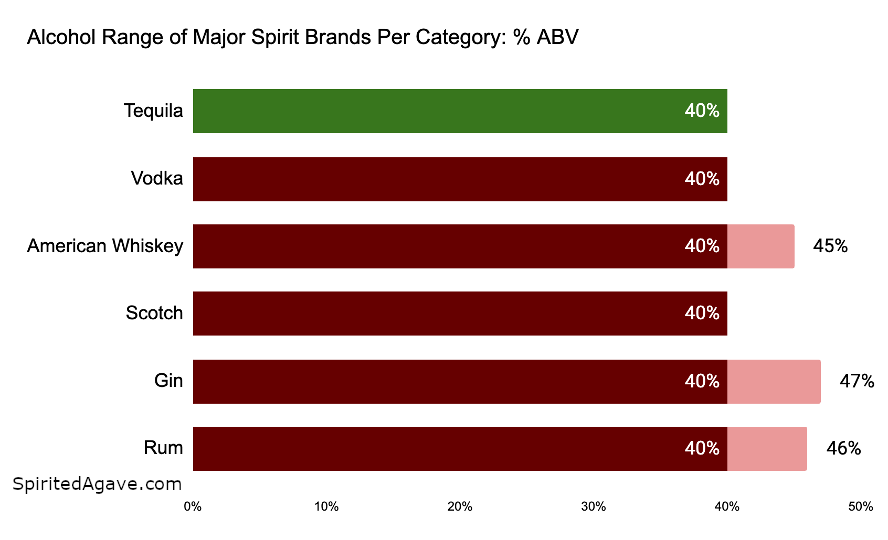
The chart shows the base bottles used in the original comparison. Higher-proof expressions, including tequila, are not included.
Related Topics
About ABV
ABV stands for “alcohol by volume” and is the recognized measurement standard for measuring the proportion of alcohol in a drink. The measurement applies specifically at 20 degrees celcius. This is because the volumes of water and alcohol expand and contract at different rates depending on the temperature.
Tequila with 40% ABV means 40% of the total volume is alcohol. A 750 ml bottle will have 300 ml of alcohol, and a 1.5 ounce shot will have 0.6 ounces of alcohol.
In the US, the measurement “proof” is often used. The proof is two times the ABV. So a tequila with a 42% ABV will be 84 proof.
Mezcal vs Tequila ABV
Mezcal is more commonly bottled at higher ABV than tequila. The vast majority of tequila sold in the US is 40% ABV. In Mexico, tequila is more commonly 38% ABV.
The regulations for tequila and mezcal are the same when it comes to ABV: tequila and mezcal both must be between 35% and 55%.
ABV at Distillation vs Bottling
Almost all tequila is bottled at lower ABV than it comes off the still. Tequila distillate, still-strength tequila, can be from 50% to 60% ABV. Filtered water is added after distilation to bring the ABV down for bottling.
Impact of Aging on ABV
Tequila is often aged in oak barrels for over two months (reposado) or over 12 months (añejo) or over three years (extra añejo). As it ages a portion of the liquid is lost due to evaporation. The loss of the liquid is known as the “angel’s share”. The ABV of the liquid can also change depending on the relative loss of water vs alcohol.
In certain climates more alcohol than water evaporates and the ABV reduces over time. This happens in cool, humid conditions. For example, in France, Armagnac reduces in ABV as it ages.
In other climates the reverse happens and the ABV actually rises as more water than alcohol is evaporated. ABV increases in hot, dry climates.
Even barrels stored in the same room can have opposite movements in ABV depending on the micro climate around them.